
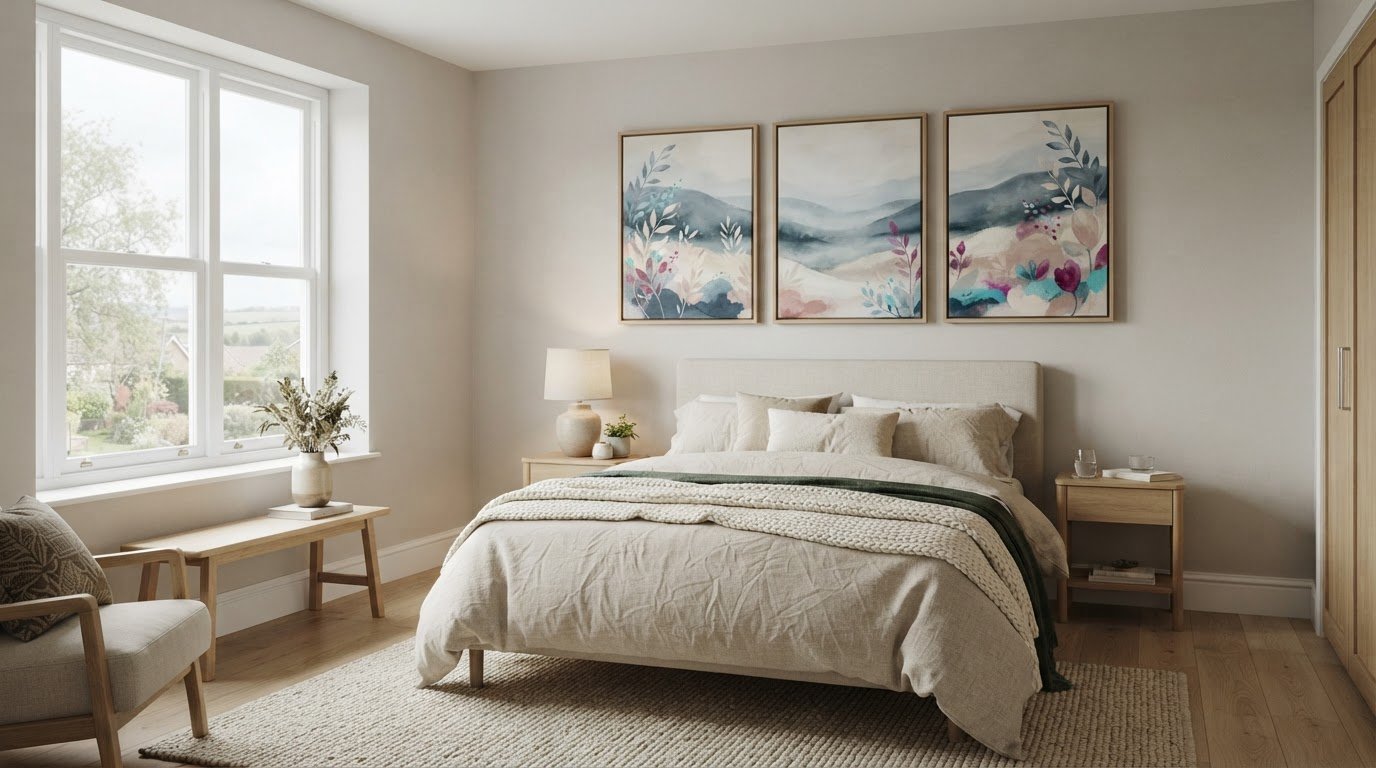
A restful bedroom doesn’t need bare walls. Choose canvas art for a bedroom in soft colours, with gentle motifs and a shape that suits the wall, to create a calm, cosy feel. Consider muted landscapes, delicate florals or abstract designs in soothing tones.
A favourite print can feel like the finishing touch, but a bold colour or oversized image may change the mood of the whole room. The right choice depends on what you want to see as you unwind and how the artwork works with your bedding, furniture and wall space.
Explore calming styles, motifs and canvas formats, with practical tips for choosing a piece that suits your bedroom. You’ll also find ideas for bringing the same cosy touch to other rooms, from a peaceful reading corner to a welcoming living space.
Key Takeaways
- Choose a motif and visual style that support the mood you want, from soft landscapes to gentle abstracts.
- Match the artwork’s subject and feel to the room, so each canvas looks at home in its setting.
- Use portrait and landscape formats to work with the shape of your wall and the furniture beneath it.
- Build a cosy bedroom look by pairing considered artwork with soft textures and restful details.
- Pick colours that complement your existing bedding and decor, then use contrast sparingly for a little interest.
Canvas art styles and motifs
Start with the mood you want at bedtime. Soft landscapes, misty hills and quiet coastlines feel restful. Floral prints add gentle detail without busy patterns, while abstract designs bring colour through loose shapes and brush-like marks. Choose one main subject first to give your bedroom wall art a clear direction.
Scandinavian style suits rooms with pale walls, simple furniture and natural textures. Look for restrained colours, uncluttered shapes and nature-inspired motifs. A muted forest scene can echo wooden bedside tables, while a simple line drawing can sit neatly above a reading chair. Keep the artwork calm rather than filling every space with detail.
For a softer look, choose a motif already found in your room. Leaf shapes can pick up a plant or botanical bedding; a shoreline print can complement blue-grey cushions. Abstract art works well when its shapes echo a rug or lampshade pattern. This small connection makes the room feel considered, not overly matched.
How much does bedroom canvas art cost in the UK? Prices depend on the canvas dimensions, print construction and format. Compare those details alongside the subject so you’re weighing like with like.
- Landscape: Try a misty hillside or quiet beach for a restful focal point.
- Floral: Choose loose blooms when you want softness and gentle colour.
- Abstract: Pick flowing shapes for movement without a detailed scene.
- Scandinavian: Use pared-back nature motifs with pale, natural furnishings.
Next, consider how the motif looks from your bed. A detailed woodland scene may reward a closer look, while broad colour fields read clearly across the room. If bedside lamps make the wall feel busy, choose a simpler image. If the wall feels plain, a more detailed floral or landscape print can add interest.
Keep the palette connected to your existing furnishings. Repeat one colour from your duvet or curtains, then let the artwork introduce a quieter shade. Warm beige bedding, for example, pairs easily with soft greens or muted clay tones. A black-and-white print adds contrast while keeping the overall palette simple.
Finally, consider the emotional tone of the subject. Still water and open skies suggest quiet; abstract marks feel livelier. Choose a picture you’ll enjoy seeing each day, not simply one that follows a trend. That personal connection helps the canvas feel at home in your room.
Canvas prints for different rooms
A canvas can bring a room together. Choose its subject to suit the room’s purpose: a misty landscape for a restful bedroom, a lively abstract print to energise a home office, or a bold botanical image as a hallway focal point. Think about what you see first when you enter.
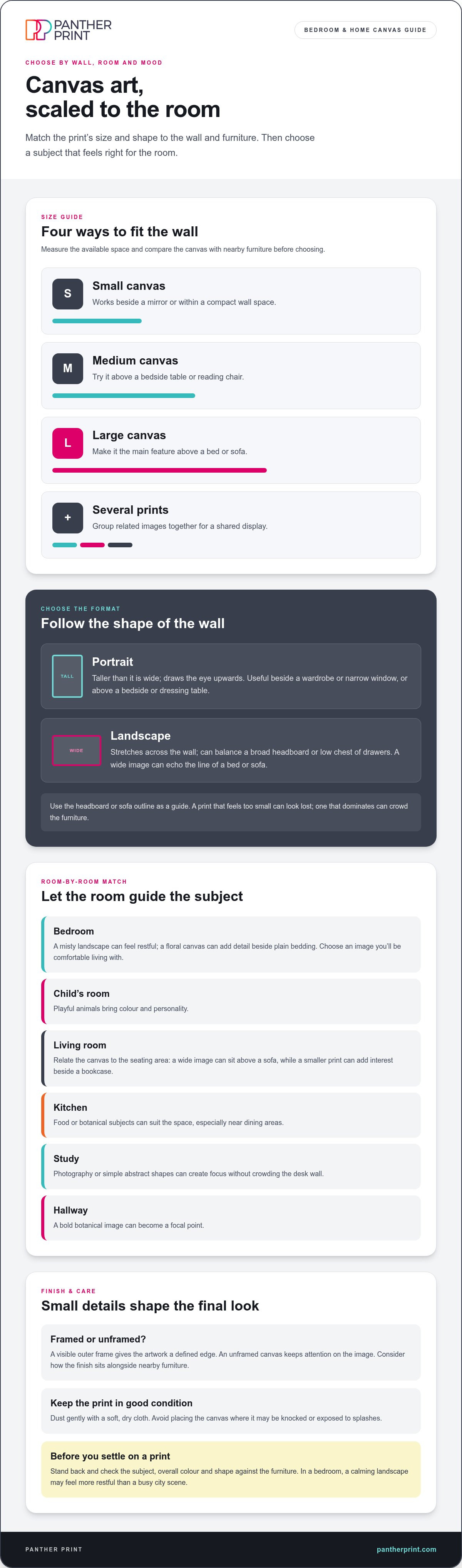
In a bedroom, choose an image you’ll be comfortable living with. A soft landscape above a chest of drawers feels settled, while a floral canvas can add detail beside plain bedding. For a child’s room, playful animals bring colour and personality. Save busy imagery for rooms where you want stronger visual energy.
In living rooms, relate the canvas to the seating area. A wide image can sit above a sofa, while a smaller print can add interest beside a bookcase. Kitchens suit food or botanical subjects, especially near dining spaces. In a study, photography or simple abstract shapes can create focus without crowding the desk wall.
Canvas prints feature an image printed on canvas fabric and supported by a frame or backing. Durability depends on the canvas material, ink, print finish and construction. These details affect how the image looks and holds up over time.
Framed and unframed canvas prints create different finishes. A visible outer frame gives the artwork a defined edge; an unframed canvas keeps attention on the image. Consider the nearby furniture: a framed print can echo a wooden sideboard, while an unframed finish can feel lighter against a simple wall.
Choose a size to suit the wall, not just the image. Measure the available space, then compare the canvas dimensions with nearby furniture. Above a bed, consider the headboard’s width; above a sofa, use its outline as a guide. A print that feels too small can look lost, while one that dominates can crowd the furniture.
- Small canvas: Use beside a mirror or within a compact wall space.
- Medium canvas: Try above a bedside table or reading chair.
- Large canvas: Make it the main feature above a bed or sofa.
- Several prints: Arrange related images together for a grouped display.
Before choosing, stand back and picture the print in the room. Check its subject, overall colour and shape against the furniture. In a bedroom, a calming landscape may feel more restful than a busy city scene. In a kitchen, a bright still life may suit the room’s everyday pace.
Keep care simple. Dust the canvas gently with a soft, dry cloth. Avoid placing it where it may be knocked or exposed to splashes. To compare subjects for different spaces, browse canvas prints for the home and consider which image best suits each room.
Portrait and landscape formats
Portrait and landscape formats shape how artwork sits on a wall. A portrait canvas is taller than it is wide and draws the eye upwards, making it useful beside a wardrobe or narrow window. A landscape canvas stretches across the wall and can balance a broad headboard or low chest of drawers. Choose the format that follows the wall’s shape.
Landscape-format prints often suit bedroom focal points. Above a bed, a wide image can echo the headboard’s line. A calm coastline or open field creates a restful scene, while a panoramic view can make a narrow wall feel more expansive. Check the artwork’s proportions against the furniture below to avoid a cramped or disconnected look.
Portrait prints work well in tighter spaces. Place one above a bedside table or dressing table. A tall tree, single flower or quiet figure gives the eye a clear path. In a small bedroom, a vertical image can add height without spreading across the wall. Keep nearby details simple, such as a lamp and a small stack of books.
Calming landscapes don’t need dramatic scenery. Choose a misty hillside, still lake or soft dunes. Look for gentle transitions between sky, land and water. A scene with open space feels less busy than one packed with buildings or sharp details. Muted greens, soft blues and warm stone shades can keep the view restful.
- Above a bed: Try a landscape format with open scenery.
- Beside a wardrobe: Use a portrait print to suit a narrow wall.
- Over a dressing table: Match the canvas shape to the furniture’s outline.
- In a reading corner: Choose a smaller portrait landscape or botanical scene.
Before choosing, mark out the available wall area with masking tape to preview a possible canvas shape. Step back and view it from the bed, doorway and chair. A format that looks balanced from one spot may feel awkward elsewhere. Check the image’s main subject too: a tree near the edge can feel cropped in a narrow portrait format.
Consider the direction of movement in the image. A shoreline running across the canvas suits a landscape shape, while tall trees or stems naturally suit portrait layouts. If a favourite scene is available in both formats, compare the crop. Keep the horizon level and the main subject clear.
For a coordinated look, combine formats carefully. Pair a wide landscape with smaller portrait prints only when their colours or subjects connect. A coastal view, for example, can sit alongside a simple botanical image in related tones. Leave breathing room between each piece so the arrangement feels calm, not crowded.
Calm and cosy bedroom decor
Build a restful bedroom around one clear focal point. Centre a quiet print above the headboard, for example, and keep the bedside walls simpler. This gives the eye somewhere to settle and stops several competing pictures from making the room feel busy.
Use the artwork to connect different textures. A canvas showing soft grasses can sit comfortably with linen bedding, a wool throw and a wooden bedside table. Repeat one shape, such as a leaf, in a cushion or lampshade. Small connections make the room feel joined up.
Keep the bed area practical. Leave space around the canvas, bedside lamps and shelves. A print squeezed between a lamp and wardrobe can look crowded. If the wall is narrow, move the artwork to a clear wall opposite the bed, then check the view from the pillow.
Try balancing hard and soft finishes. A smooth canvas can soften painted walls and straight-edged furniture. Add a knitted blanket or gathered curtains nearby. For example, pair a simple abstract print with a soft headboard and rounded ceramic lamp.
Reduce visual clutter before choosing extra decoration. Clear the bedside table, then assess the wall from the doorway. Keep useful items close to the bed, such as a lamp and book. This makes the artwork easier to notice without adding more objects.
- Above the headboard: Centre one main canvas for a settled focal point.
- Beside the bed: Use a small print where a larger one feels crowded.
- Across the room: Choose a gentle subject for the view from bed.
- Near a reading chair: Add a complementary print to define the corner.
Lighting changes how a canvas feels throughout the day. Observe the wall in morning and evening light before settling on a position. A bedside lamp may cast shadows across nearby artwork. Moving the canvas away from direct glare can make its details easier to enjoy.
Think about how you want the room to feel at bedtime. A still lake can suggest quiet; a close-up botanical print can add softness. If busy city scenes disrupt the calm mood you’re creating, keep them away from the main bed wall.
For a finished look, repeat a detail rather than matching everything. A canvas with a fine botanical line might echo a leaf motif on the curtains. Keep other patterns simpler so each item has room to stand out while the bedroom still feels thoughtfully arranged.
Make changes in a clear order: remove clutter, position the canvas, then add textiles and small accents. Place the artwork before buying cushions, for example. You can then choose one or two details that support its subject instead of filling the room with unrelated decorations.
How do I choose canvas art colours to match bedroom decor?
Start with the colours already in your room. Look at the duvet, curtains and bedside furniture together, then choose one colour to repeat in the canvas. A print with soft green leaves, for example, can link sage bedding with a leafy plant. This creates a visual connection without matching every item.
For a calm palette, pair muted shades. Dusty blue works with warm cream and pale grey; soft olive sits comfortably beside oatmeal linen and natural wood. These combinations connect the artwork to the room while giving it a clear presence. Use a brighter shade only as a small accent.
Want more contrast? Balance a dark feature with a light one. A charcoal abstract print can stand out against pale walls. Add a cushion or lampshade with a small charcoal detail to repeat the colour without making the whole bedroom feel heavy. If your walls are already dark, choose a canvas with lighter areas.
Use this quick colour check before choosing:
- Pick a base: Note the main colour in your bedding or curtains.
- Choose a companion: Add a nearby shade, such as cream beside terracotta.
- Decide on contrast: Use one darker or brighter detail for definition.
- Check the whole room: Compare the canvas with furniture and soft furnishings.
Warm and cool colours create different impressions. Blush, rust and ochre can make a room feel warmer; blue, green and lavender often look cooler beside white or grey. If your bedroom has warm oak furniture, a print with muted blue can balance it. With cool grey furniture, soft peach can add warmth.
Patterns matter too. If your duvet has large flowers, choose a canvas with simpler shapes. A plain cream bedspread leaves room for a more colourful abstract print. For a striped rug, pick artwork that repeats one stripe colour. This helps keep the room from feeling visually crowded.
Check colour in the room’s actual light. Hold a cushion or bedding sample near the wall during daytime and evening. A blue-grey print may look cooler beside a bright window, then softer under a warm bedside lamp. Compare the canvas with the wall colour, not just a screen preview.
Make a small palette before deciding. Write down three colours: one dominant, one supporting and one accent. Cream, sage and muted gold, for example, can guide your choice. Keep the accent subtle for a restful feel; for a livelier room, let that final shade show more clearly.
Ready to find a print that fits your palette? Explore canvas designs in colours that suit your bedroom.
Panther Print: Abstract Canvas Prints
Panther Print offers Abstract Canvas Prints for bedrooms that need colour, shape or a simple focal point. Choose an abstract design that picks up a shade in your bedding, or select Animals & Wildlife for a nature-inspired touch. Art for Kids & Nursery Art and Banksy Canvas Prints offer other subject choices for suitable rooms at home.
Use these ideas to narrow your choice. Start with the room’s mood, then consider its colours, wall space and preferred subject. Panther Print’s range brings different themes together, helping you compare options and find a canvas that suits your home.
Browse the canvas print options at Panther Print, or contact the team if you’d like help. Visit pantherprint.com to explore the range.
Make your bedroom feel like yours
Let your chosen artwork express your home, rather than serve as a design rule. A print can reflect a favourite place, a memory or simply the colours you enjoy waking up to. That personal touch gives canvas art for your bedroom a lasting place, even as you change bedding or rearrange furniture.
For a starting point, explore Panther Print’s Abstract Canvas Prints, Animals & Wildlife, and Art for Kids & Nursery Art. Each offers a different way to bring character into a bedroom or another room at home. Choose the image that feels right, then let the rest of the room grow around it.
Ready to find a design that feels at home on your wall? Contact Panther Print about bedroom canvas art and take the next step towards a space that feels more personal. A thoughtful choice can make your room feel unmistakably yours.
Frequently Asked Questions
What canvas art styles suit a bedroom?
Choose a style you’ll feel comfortable seeing every day. A soft photographic scene can suit a nature-loving room, while a simple abstract print works with clean-lined furniture. For a personal touch, choose a subject connected to a favourite place or interest. Consider the image’s detail: a busy pattern can compete with patterned bedding, while a simpler design can balance it.
What size canvas art should I choose for a bedroom wall?
Choose a canvas to fit the wall area and nearby furniture. Before ordering, cut paper to the artwork’s listed dimensions and temporarily position it on the wall. View the outline from the doorway and from the bed. A narrow space beside a wardrobe may suit a smaller canvas, while a broad, uninterrupted wall can take a more substantial focal piece.
How high should canvas art hang above a bed?
Position the artwork so it feels connected to the bed, not stranded near the ceiling. Use the headboard’s top edge as a reference, then adjust the canvas until the gap looks balanced. Check the view from the pillows and bedroom entrance. Account for nearby wall lights, shelves and the headboard’s shape before marking the fixing points.
Is one large canvas or a gallery wall better for a bedroom?
One large canvas creates a simple focal point and keeps the wall uncluttered. A gallery wall can bring together personal photographs or related prints. Group images from the same holiday, for example, or choose artwork with a shared colour. Lay out the arrangement on the floor first. Check that its overall shape works above the bed and leaves space around lamps or shelves.
How do I hang canvas art safely above a bed?
Use a fixing suited to your wall material and the canvas’s hanging points. Follow the fixing manufacturer’s instructions, including its stated load guidance. Panther Print says its prints are lightweight and can be mounted with nails, 3M Command Strips or another chosen fixing. Make sure the fixing is secure before placing the bed beneath the artwork, and avoid positioning it where it may be knocked.
How can I choose calming bedroom wall art?
Choose imagery with a quiet visual rhythm, such as still water, gentle foliage or an open countryside view. Consider how it looks beside the bedding in daylight and lamplight. A personal photograph of a peaceful place can also make the room feel more individual. When choosing canvas art for a bedroom, favour a subject you enjoy returning to, rather than one picked only to match a passing trend.