
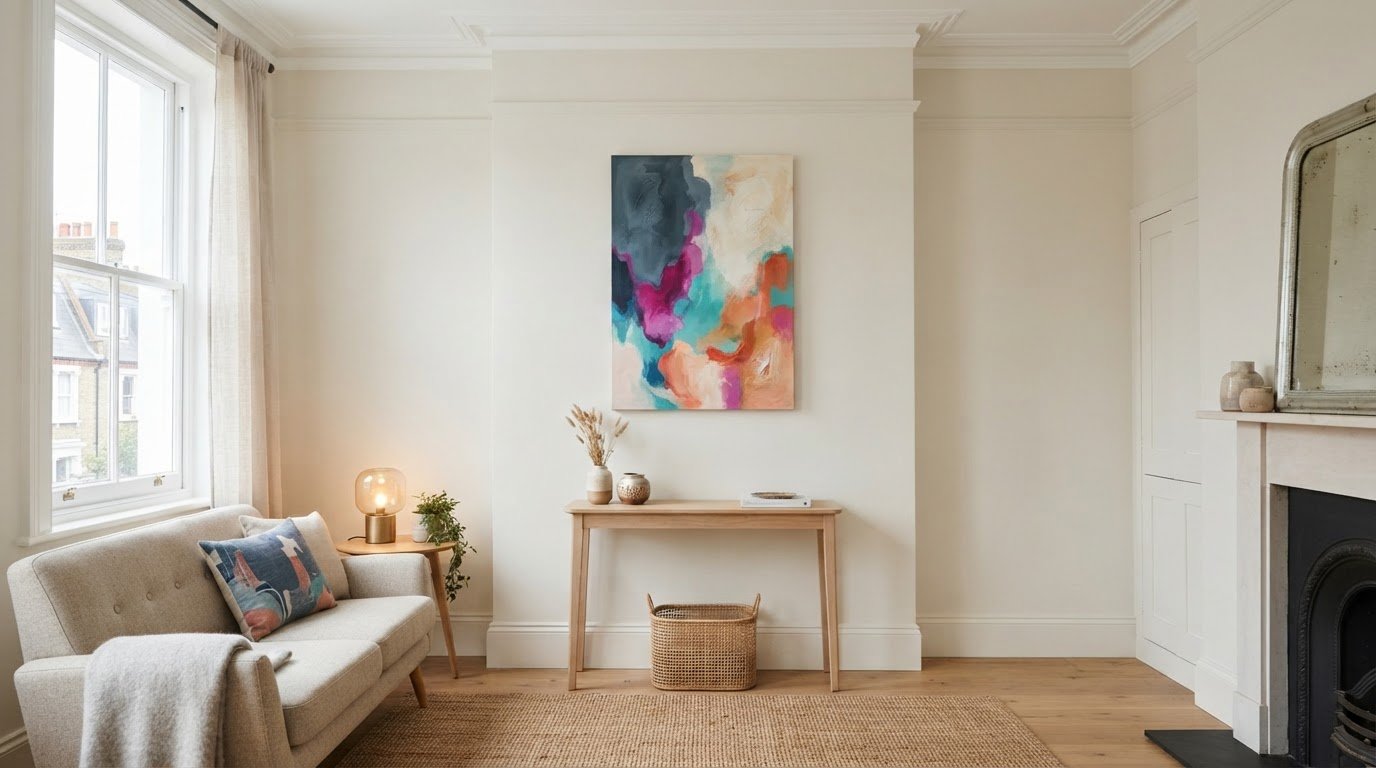
What if one well-chosen canvas could make a small room feel more open, not less? It’s easy to worry that artwork will overwhelm a compact wall or compete with the furniture. The right scale, colour and placement can add personality without making the space feel crowded. That’s the key to choosing canvas art for small rooms: give the eye a clear focal point, then leave it room to breathe.
You don’t need to leave every wall bare or choose a tiny print to keep a room feeling spacious. A single canvas can bring colour, a favourite subject or a personal photograph into the space. Start with the colours and furniture you already have, then choose an image that feels connected to them.
In this guide, you’ll learn how to judge canvas size, match artwork to your room’s mood and find a spot where it feels at home. You’ll also find placement ideas, including using vertical art to draw the eye upwards, and ways to avoid making a compact room feel busy. Small space, big personality!
Key Takeaways
- Choose canvas art for small rooms by balancing the artwork’s visual weight with the wall and nearby furnishings.
- See when one focal point, a small grouped display or an empty wall can work best.
- Use colour and open space around a canvas to make a compact room feel considered rather than crowded.
- Assess your wall, furniture and usual viewpoints before choosing where artwork will sit.
- Explore how themed prints or a personal photo on canvas can give a small space a focal point that feels like you.
Canvas art for small rooms: why the right wall can change the feel
A small room needs personality, but adding character without making the space feel busy can be a challenge. The answer isn’t simply to choose the smallest canvas or leave every wall bare. Successful canvas art for small rooms balances the artwork with the wall and nearby objects, so each element has room to stand out.
Art won’t physically make a room bigger, but thoughtful placement can change how it feels. A canvas in a clear sightline draws the eye to a focal point, while a considered gap around it helps the space feel calmer. As you plan, think about scale, or how the artwork relates to its surroundings; sightlines, or what you see from the doorway and usual places you sit; and breathing space, the clear wall area that stops everything competing for attention.
What makes a canvas feel at home in a compact room?
Look at the whole wall, not just the empty patch where you might hang a print. A canvas above a broad sofa may feel small, while the same artwork could dominate a narrow wall beside a wardrobe. Nearby furniture, shelves and lamps all affect its perceived size. Step back and check whether the canvas feels connected to these objects or squeezed between them.
One clear focal point can feel calmer than several decorative details competing for attention. That doesn’t mean there’s one correct canvas size for every room. Choose art you enjoy, then consider how its subject, colour and visual weight work with the space. A little background on colour theory can help you think about how colour harmony and contrast affect a room’s mood.
Which small rooms can benefit from canvas art?
Almost any compact room can feel more personal with a well-placed image. In a bedroom, a favourite photograph or gentle landscape can add a restful touch. A narrow hallway might suit a vertical city scene that gives the eye somewhere to travel. In a compact lounge, abstract or floral canvas art can bring colour to a wall, while a home office might feel more inviting with photography or a subject that inspires you.
Let the room’s purpose guide the mood. Choose a calming image for a place to unwind, or a lively subject for somewhere you work or gather. Panther Print’s handmade themed canvas prints cover subjects from landscapes and flowers to cities and animals. Photo-on-canvas prints offer a personal way to make a focal point meaningful. Choose what feels right for the room, then give it space to stand out.
How scale, colour and negative space shape small-room canvas art
Choosing canvas art for small rooms isn’t only about measuring the print. Its actual size is the width and height you can measure; its visual weight is how prominent it feels. A detailed image with strong contrast may draw more attention than a softer design of similar dimensions. Consider both before deciding where a canvas will sit.
Negative space is the clear area around the canvas and between it and nearby objects. It gives the artwork room to stand out instead of making the wall feel packed. Leave space around the print, and consider how it relates to furniture, shelves and lamps. As The Interior Design Institute explains through the seven core elements of design, space and line help shape how a room is seen.
Visual balance comes from matching the artwork’s scale to its surroundings, using contrast to guide the eye and leaving enough clear space for each element to breathe.
How should canvas size relate to the wall and furniture?
Judge the available wall area together with the furniture beneath or beside it. A canvas that looks balanced above a bed may seem undersized over a wide sofa, while the same print could feel imposing above a narrow console. As a general guide, artwork above furniture can be around two-thirds of its width, but treat that as a starting point, not a strict rule. The shape of the wall and your own taste matter too.
Before choosing, measure the space and mark out a possible canvas shape with paper or masking tape. Check it from the doorway and from where you usually sit or work. This simple test helps you picture the print in place before committing. A dedicated guide to choosing canvas print size can help you take the next step.
Which colours and subjects suit a compact space?
Quieter colours can blend gently with existing décor and create a settled feel. A bolder accent can add energy and give the eye a clear place to land. Neither approach is automatically better. Avoid combining several strong colours and busy patterns unless you want a lively look.
Think about mood as well as colour. A landscape may bring a restful, open feeling; abstract art can add shape and energy; florals can introduce a softer touch; and photography can make a favourite place or moment part of your everyday space. Choose a subject that connects with your furnishings and feels like you. For inspiration, browse handmade themed canvas prints and consider which image would feel at home on your chosen wall.
Will canvas art make a small room look smaller? Compare the options
No. A canvas doesn’t automatically make a compact room feel smaller. The overall arrangement matters more: the artwork’s visual weight, what surrounds it and how much open wall remains. A single print can create a tidy focal point, while several competing details may make the same wall feel busy. An empty wall can feel calm too, but it may leave a room without the colour or personality you want.
Compare the options against your wall, furniture and preferred level of decoration:
| Option | Visual impact | Breathing space | May suit |
|---|---|---|---|
| One focal canvas | Creates one clear point of interest | Usually leaves open wall around the image | A wall above a bed, sofa or desk where you want a simple focal point |
| A small grouped display | Can feel lively, with several images sharing attention | Depends on spacing; crowded gaps can make the group feel busy | A wall with enough room to keep the arrangement neat and aligned |
| An empty wall | Keeps attention on the room and its furnishings | Offers the most uninterrupted wall space | A room that already has plenty of colour, pattern or decorative detail |
One canvas or several: which arrangement feels calmer?
One well-placed image often feels straightforward because the eye has a clear place to settle. A group can bring more personality, but unrelated images may compete for attention. To make a grouped display feel intentional, keep the gaps consistent and line up edges or centres. If the wall is narrow or already has shelves and furniture, mark out the arrangement first and see whether it feels balanced from the doorway.
How can you keep a bold canvas from dominating?
A strong colour or striking subject can work beautifully as a focal point. Let it lead rather than asking every part of the wall to compete. Pair a vivid canvas with simpler surrounding colours, and avoid adding lots of extra decoration nearby. Check the view from the doorway and your usual seat or bed. If the image is the first thing you notice and the rest of the wall still feels settled, the balance may be right.
There’s no single best layout for canvas art for small rooms. Choose an arrangement that suits the wall and the way you use the room. The aim isn’t to fill every gap or remove all decoration. It’s to give the artwork enough space to feel at home.
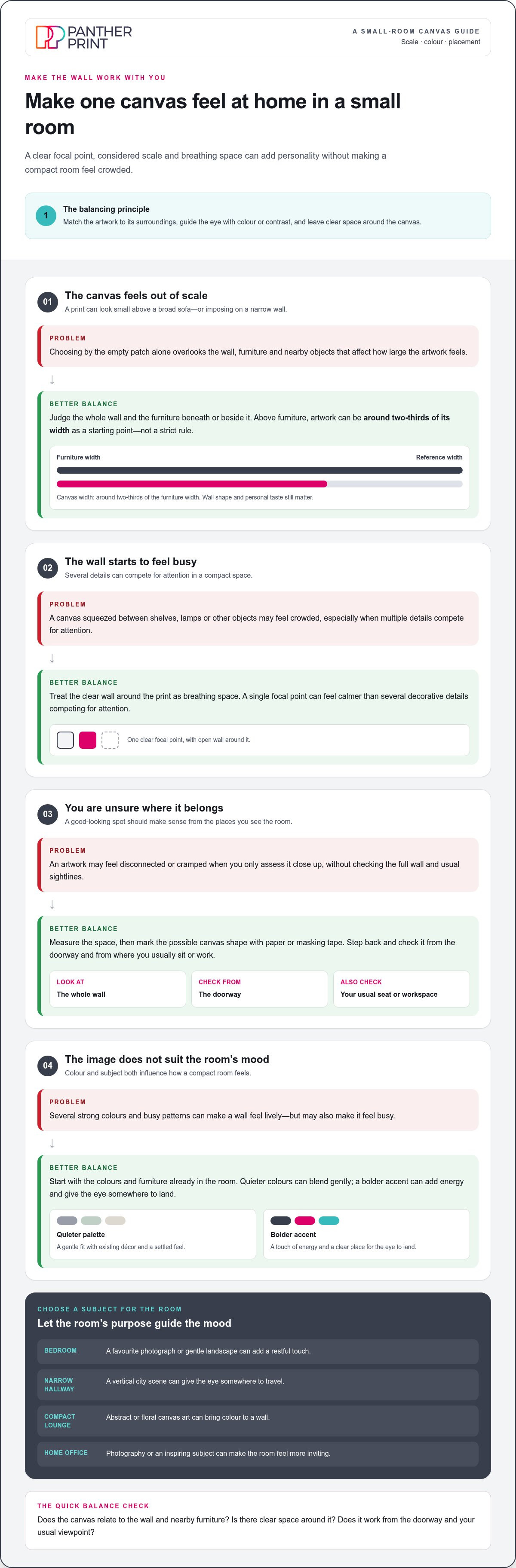
A practical plan for choosing and placing canvas art in a small room
A little planning can help you avoid choosing a canvas that feels awkward once it’s on the wall. Use this simple process to make the choice with confidence:
- 1. Identify the wall. Choose a spot that’s visible from a normal entry point, rather than a wall hidden behind an open door or tall furniture.
- 2. Note what’s nearby. Look at furniture edges, shelves, lamps and anything else that affects the usable wall area.
- 3. Choose a mood. Decide whether you want the room to feel restful, lively, cosy or more personal.
- 4. Assess the layout. Check how the canvas might sit with its surroundings and whether the wall will still feel comfortable to look at.
Measure and preview the artwork before choosing
Note the usable wall width and height, then consider the furniture beneath or beside it. Include nearby obstacles such as a light switch, shelf or door frame. These details help you judge the space available, rather than choosing based on the wall’s full dimensions alone.
Try a paper template. Cut or join paper to the proposed artwork footprint, then use removable tape to place it on the wall. Step back and look from the doorway, your usual seat and anywhere you work or sleep. Does it feel balanced from each position? Adjust the outline until it feels right. A guide to choosing canvas wall art and one on selecting a suitable canvas size can offer more help with those decisions.
Match the artwork to the room’s mood and routine
Choose with the room’s everyday purpose in mind. A peaceful landscape might suit a bedroom, while a lively abstract print could bring energy to a home office. Use cues already in the room: pick out a colour from a cushion, bedding or rug, or choose a subject that complements the furniture without matching every detail.
Keep your own taste in the mix. The right print should feel at home and mean something to you, whether it features a favourite subject or a personal photograph reproduced on canvas. With canvas art for small rooms, a clear plan helps you balance the wall, the artwork and how you use the room.
Ready to explore ideas for your wall? Browse Panther Print canvas subjects and find a theme that suits your room’s mood.
Find canvas art for small rooms that feels personal
The best choice brings together three things: scale that suits the wall, a clear sightline from the places you use the room, and enough breathing space around the image. With those in mind, choosing canvas art for small rooms becomes less about following decorating rules and more about finding a print that feels right in your home.
Panther Print’s handmade themed canvas prints offer plenty of ways to add personality to a compact space. Browse abstract, landscape, floral, wildlife and black-and-white canvas art, then consider how each subject might sit alongside your furniture and existing colours. You can also turn a favourite photograph into a personal canvas print, creating a focal point connected to a place, person or memory that matters to you.
Choose a subject that suits the room, not just the trend
Let the subject help set the mood. Abstract art can bring colour and movement; a landscape may feel calm and open; florals can add a soft, natural note; and photography can give the wall a familiar or meaningful touch. Black-and-white art offers contrast without introducing more colour. These are starting points, not rules. Choose an image you’ll enjoy seeing every day, and look for a palette that sits comfortably with your textiles, furniture and wall colour.
Trends can spark ideas, but your room doesn’t need to follow one. A print that connects with your own taste will feel more individual than an image chosen only because it’s fashionable. It could be a favourite flower, a striking abstract design, a wildlife scene or a personal photograph.
Make your next canvas choice with confidence
Before deciding, run through this quick checklist:
- Wall: Is there enough usable space for the artwork?
- Furniture: Does the canvas feel balanced with what’s beneath or beside it?
- Colour: Does the palette work with the room, or add a welcome accent?
- View: Does it look right from the doorway and your usual seat, bed or desk?
- Space: Is there enough clear wall around it to keep the arrangement comfortable?
Thoughtful placement matters more than a rigid decorating rule. Trust your eye, make room for the artwork to stand out, and choose a subject that feels like you. Ready to find a favourite? Explore Panther Print’s canvas art and give your small room a personal finishing touch.
Make every wall feel considered
The right canvas can bring character to a compact room without making it feel crowded. Keep scale, sightlines and breathing space in balance, and consider how the artwork sits with nearby furniture and colours. A quick paper template can help you picture its place before you choose.
Let the room’s mood and your own taste guide the subject. Panther Print’s handmade canvas prints for home and office spaces span abstract, landscape, wildlife and photography themes. A personalised photo-on-canvas print can add a meaningful touch and create a focal point that feels like yours.
There’s no single rule for canvas art for small rooms. Choose an image you’ll enjoy seeing every day, give it room to stand out, and trust what feels right in your space. Explore handmade canvas art for your space and find a print that brings your walls to life!
Frequently Asked Questions
What size canvas art is best for a small room?
The best canvas size is the one that feels balanced with the wall and nearby furniture. Note the usable wall space, then consider what sits beneath or beside the artwork. A print above a desk may need a different visual scale from one above a bed or sofa. Try outlining the proposed size with paper before choosing. This makes it easier to judge the artwork’s presence from across the room.
Can a large canvas work in a small room?
Yes, a large canvas can work well in a small room if it has enough clear space around it. One strong image can create a focal point and feel less cluttered than several smaller pieces competing for attention. Check that it doesn’t crowd furniture, shelves or other wall details. View the outline from the doorway and your usual seat to see whether the scale feels comfortable in everyday use.
How do you arrange canvas art on a small wall?
Start by choosing a clear area of wall and deciding whether one canvas or a small group suits it best. If you’re arranging several pieces, keep their spacing consistent and align their edges or centres so the display feels intentional. Leave room around the arrangement, especially near shelves, lamps and furniture. Use paper templates to test the layout, then view it from the doorway and the places where you spend time.
Which colours make a small room feel bigger?
Light, quiet colours can help a room feel airy, particularly when they sit comfortably with the wall and furnishings. You don’t have to avoid stronger colours, though. A vivid accent in the artwork can draw the eye and add personality. Aim for a palette that works with existing textiles and furniture, and avoid introducing too many competing accents if you want the room to feel calm. The overall balance matters more than a single colour.
Is one canvas better than a gallery wall in a small room?
Neither option is always better. One canvas gives the eye a clear focal point and can make a compact wall feel calm. A small grouped display can add variety, but may look busy if the pieces are tightly spaced or compete in colour and subject. Consider the wall shape and nearby objects, then preview your preferred arrangement with paper. Choose the layout that leaves enough breathing space and feels right for your room.
What kind of canvas art works well in a small bedroom?
Choose a subject that supports the mood you want in your bedroom. A landscape or softer photographic image can create a restful feel, while abstract or floral art can add colour and character. Black-and-white prints offer contrast without introducing another colour palette. Think about the bedding and wall colour, too. Personal photographs on canvas can make the room feel especially individual, provided the image and placement feel comfortable in your everyday space.
Where should you hang canvas art in a small room?
Hang canvas art where it can be seen clearly without getting in the way of furniture, doors or everyday movement. A wall above a bed, sofa or desk can provide a natural focal point, as long as the artwork feels balanced with the furniture below it. Check the view from the doorway and your usual sitting or working position. Avoid squeezing a canvas between competing details, and leave clear wall around it so it can stand out.