
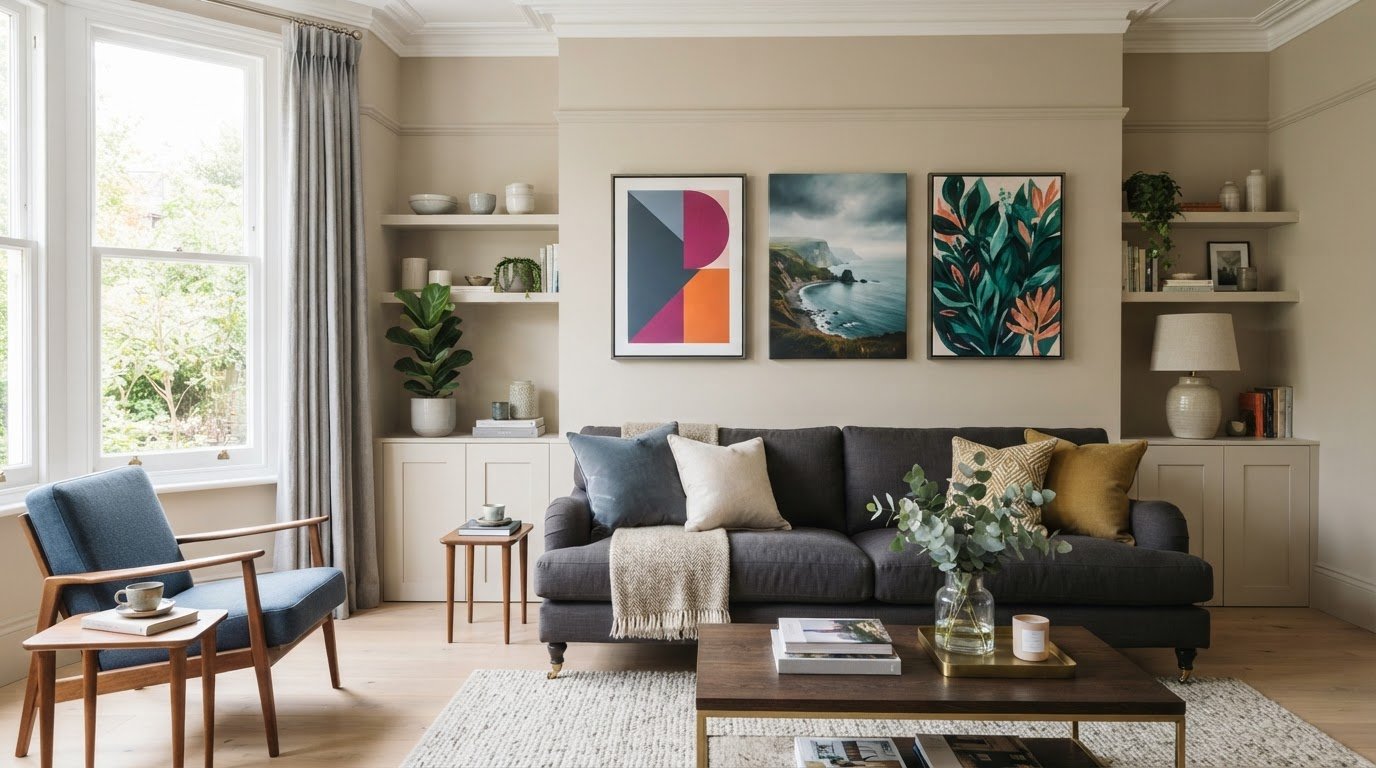
Your canvas doesn’t need to match your living room walls exactly. The best canvas prints for the living room either pick up colours already in the space or create a deliberate contrast, such as bold artwork against neutral walls. Choose a palette that complements your décor, and the room will feel more cohesive.
Matching colours can feel like the safest choice, but a gentle contrast can bring a plain wall to life. Softer artwork can also sit beautifully against a more colourful backdrop. The key is choosing a print that works with the room, not just the paint.
Here are practical ways to choose artwork for your wall colour and room style, from calming nature scenes to striking oversized designs. We’ll also look at framed and unframed styles, so you can picture the finished look before deciding.
Key Takeaways
- Choose artwork that echoes colours in the room or creates a thoughtful contrast with the walls.
- Use abstract designs, wildlife, floral subjects or city scenes to bring a clear mood to your living space.
- Decide whether a framed or unframed finish best suits your décor and the look you want on the wall.
- For a balanced feature above a sofa, aim for artwork around two-thirds to three-quarters of the furniture’s width.
- Explore nature-inspired and oversized designs to add a calming focal point or make a bold statement.
What types of canvas prints are recommended for a living room?
Choose artwork that suits the room’s mood and the wall it will occupy. Abstract art, landscapes, floral motifs, typography, portraits, animals and city architecture all work well as living room subjects. For a modern space, consider geometric compositions or black-and-white photography. A colourful abstract design can add energy, while a soft landscape can create a calmer feel. Canvas prints for living room walls can set the mood before you add smaller decorative touches.
Abstract canvas art is useful when you want colour and movement without a recognisable subject. Look for shapes, lines and colour blocks that connect with details already in the room. A print with muted green, for example, can echo cushions or plants, while a stronger orange accent can stand out against a quieter palette. Let one or two colours lead rather than trying to match every detail.
Consider the wall before settling on a design. Above a sofa, a bold abstract composition can create a focal point. A feature wall can handle a busier pattern or stronger contrast, while a smaller, simpler design can keep the arrangement balanced above a console table. In a relaxation corner, softer colours and loose forms can support a restful atmosphere.
For a modern living room, compare geometric art with black-and-white photography. Geometric shapes bring structure and a crisp feel, while monochrome photography adds contrast without introducing another colour. In a traditional room, floral motifs, landscapes or portraits can sit naturally alongside familiar furnishings. Animals and city architecture offer other ways to add personality or a sense of place.
Use these steps to narrow your choice:
- Set the mood: Choose calm landscapes or soft abstract shapes for a quieter corner.
- Pick a colour lead: Repeat a cushion, rug or lampshade colour in the artwork.
- Match the visual pace: Choose simple forms for a busy room, or lively patterns for a plain wall.
- Consider the subject: Try flowers, wildlife, portraits or city scenes to give the wall character.
- Picture the placement: Compare the print above a sofa, console table or fireplace before deciding.
How do you clean and care for a canvas print? Gently dust it with a clean, dry, soft cloth, such as cotton or microfibre. Avoid scrubbing and harsh chemicals, which can affect the printed finish.
Before choosing, stand where you usually sit and look towards the intended wall. Notice nearby colours, furniture shapes and competing patterns. If the room already has strong features, a restrained abstract print can add interest without crowding the view. If the space feels plain, a more colourful design can bring the wall to life. The best canvas prints for living room décor feel connected to your home, not copied from it.
Choosing artwork to suit a room’s style and colour palette
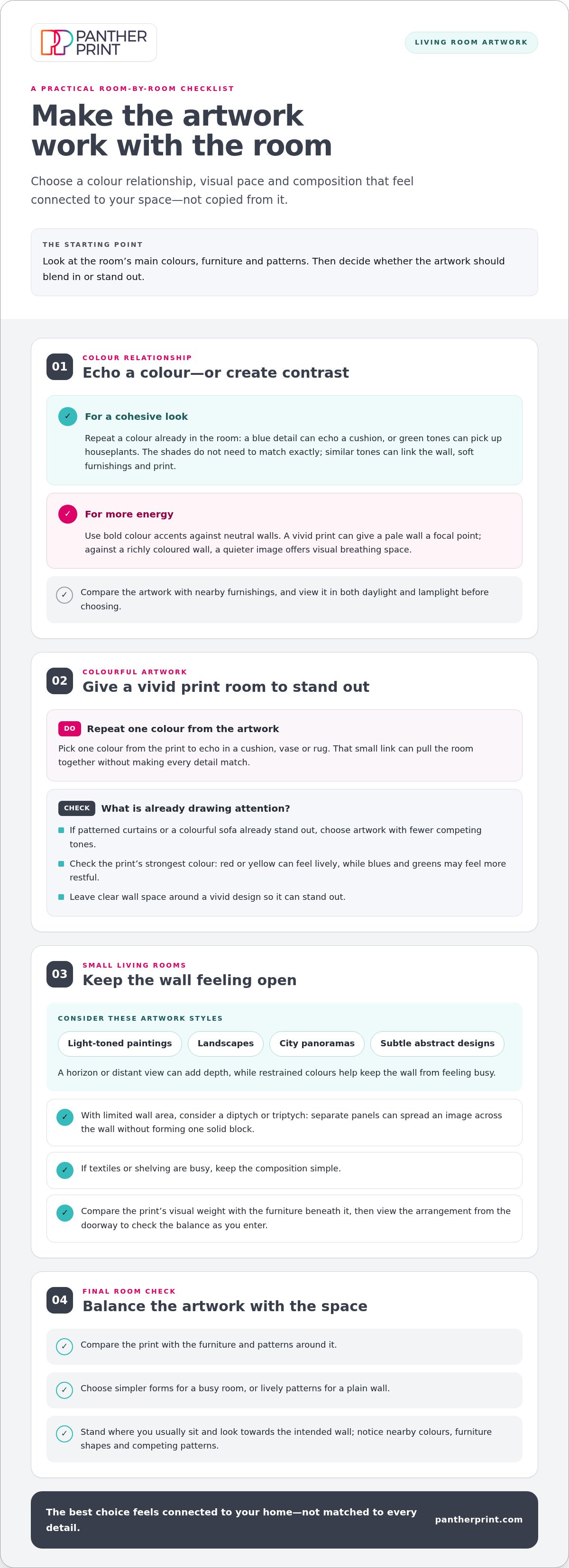
Start with the room’s main colours, furniture and patterns. Then decide whether the artwork should blend in or stand out. Choosing canvas prints for living room walls is easier when you compare each print with the furnishings around it.
Matching or contrasting wall colours
For a cohesive look, choose artwork that repeats a colour already in the room. A blue detail could echo a cushion, while green tones might pick up houseplants. The shades don’t need to match exactly. Similar tones can still link the wall, soft furnishings and print.
Contrast adds energy. Neutral walls can take bold colour accents, while vibrant walls often suit softer, muted artwork. A vivid print can give a pale wall a focal point; against a richly coloured wall, a quieter image offers visual breathing space. Compare the artwork with nearby furnishings, and view it in daylight and lamplight before choosing.
Famous artists can help you picture a palette. Vincent van Gogh’s Almond Blossoms offers expressive colour, while Claude Monet’s Impression (Sunrise) has a softer, atmospheric feel. Choose an iconic image for its mood and colours, not just its familiar name. Consider how its strongest shades would look beside your sofa, curtains or rug.
Bright multicoloured artwork
Bright, multicoloured artwork brings movement to plain walls and simple furnishings. Pick one colour from the print to repeat in a cushion, vase or rug. That small link helps the room feel pulled together without making every detail match. If patterned curtains or a colourful sofa already draw attention, look for artwork with fewer competing tones.
Check the print’s strongest colour first. Red or yellow can become a lively accent, while blues and greens may feel more restful. Leave clear wall space around a vivid design so it can stand out. A multicoloured image can also connect separate shades already in the room, such as a blue throw and terracotta accessories.
Artwork for small living rooms
Light-toned paintings, landscapes, city panoramas and subtle abstract designs can help a small room feel more open. A horizon or distant view adds depth, while restrained colours keep the wall from feeling busy. For living rooms with limited wall area, consider a diptych or triptych. Separate panels can spread an image across the wall without forming one solid block.
Keep the composition simple if the room has busy textiles or shelving. Compare the print’s visual weight with the furniture beneath it, then view the arrangement from the doorway. This perspective shows whether the colours and shapes feel balanced as you enter.
Framed and unframed canvas prints
Choose a finish that suits the artwork, wall and furniture. An unframed canvas gives the image a simple, clean edge, while a frame adds definition. A slim floating frame can create a visible gap around the canvas, making the image appear separate from the wall. Each choice changes the overall look, even when the artwork stays the same.
What should you compare when choosing canvas print materials and finishes? Look at the canvas surface, printed finish, frame style and how the edges appear. These details affect the artwork’s texture and presence, so compare them together rather than choosing by colour alone.
Framed listings show how much sizes can vary: examples include 36 by 24 inches and 30 by 40 centimetres. Check the full dimensions before deciding, especially if the print will hang above a console or sofa. An unframed canvas can feel less formal, while a frame can help define a print against a busy wall or patterned décor.
Prices for framed canvas prints depend on factors such as the artwork’s size, frame and finish. Compare the complete item and its dimensions, rather than judging cost from the image alone. A larger print or more substantial frame may affect the total. Set your budget first, then compare options with similar sizes and finishes.
A set of three can make a broad wall arrangement feel connected. One listed modern abstract set measures 30 by 40 centimetres. Use the three panels as a single composition, keeping their order and spacing consistent. Before hanging, lay the panels out on the floor. This makes it easier to check how the image flows across the group.
How many canvas prints should you use for a gallery wall? There’s no fixed count. Choose enough to suit the available wall and your preferred arrangement. Start with a central print, then build around it using a shared colour, subject or frame finish to tie the display together.
Floating frames suit artwork that needs extra definition without a heavy border. Their open-looking edge can give a canvas a finished appearance while keeping attention on the image. For a calm display, repeat the same frame style across several prints. For a more collected look, combine different images but keep one detail consistent, such as colour or subject.
Before choosing, measure the wall space and compare it with the complete framed dimensions. A frame adds to the canvas’s overall footprint, so the artwork may occupy more room than its printed area suggests. Match the finish to nearby furniture, then check that the image remains the main focus.
Nature and landscape canvas art
Nature prints bring familiar outdoor scenes into a living room. Choose woodland paths, open fields, flowers, lakes or coastal views, each of which creates a different focal point. A soft field scene can feel spacious above a sofa, while a close-up floral image adds detail to a smaller wall. First decide whether you want a wide view or a single natural feature.
Landscape orientation suits broad walls and long furniture, such as a sofa or sideboard. It lets a horizon, river or tree line stretch across the image. Portrait orientation works well beside a doorway or on a narrow section of wall, drawing the eye upwards. Measure the available space, then compare its shape with the artwork’s composition.
For a recognisable example, Joseph Mallord William Turner’s Sunset Over A Lake is available in 72 variations. Gustav Klimt’s Malcesine On Lake Garda offers another lake-scene option to consider. These options give you room to compare the image’s scale and format with your wall. Look at the edges and horizon: a wide lake scene may feel more balanced above broad furniture.
Landscape prints can show depth through fields, hills and distant skies. The Path in the Wheat Fields at Pourville offers a countryside subject, while A Pathway in Monet’s Garden centres on a garden walk. For a living room with a clear view towards a feature wall, choose a scene with a path or river leading into the distance. This visual route gives the image direction.
Seascapes bring a different kind of open view. Consider the balance between water, shoreline and sky. A print with a broad horizon can suit a wide wall, while a closer coastal view may add texture. Compare the colours with nearby furnishings, then decide whether you want the sea to feel calm or lively. Still water and a wave-filled coast create very different moods.
Water appears in several named landscape examples. Turner’s Sunset Over A Lake suggests a changing sky over still water. The Bridge Over a Pond of Water Lilies centres on a structure and garden pond. Choose a bridge or shoreline for a clear focal point, or a more open lake or sea view for a less crowded composition.
Before choosing, match the subject to the wall’s role. Above a console table, a garden path can give the display a clear centre. Above a sofa, a wide landscape can follow the furniture’s horizontal line. For a quiet reading corner, consider a sheltered woodland or still lake. Keep the main subject visible from your usual seat.
Finally, consider the artwork’s orientation, subject and visual detail together. A broad seascape, a tall waterfall and a garden path each occupy space differently. Picture the print beside the room’s furniture, not in isolation. This simple check helps you choose nature art that feels at home on its intended wall.
Oversized canvas prints for living rooms
An oversized canvas can give a large living room one clear focal point. Above a sofa, aim for artwork around two-thirds to three-quarters of the furniture’s width. This keeps the print visually connected to the sofa without letting it overwhelm the wall. Measure the furniture first, then compare the artwork’s full dimensions with the space above it.
For example, a large pink floral canvas print is listed at 36 by 24 inches. Its wide format can suit a broad wall, especially above a sofa or console table. Check the height as well as the width. A print needs enough surrounding wall space to stand out, rather than appearing squeezed between shelves, lamps or doorways.
Before choosing a large design, decide what you want the room’s main feature to be. A sweeping landscape can draw the eye across the wall, while a bold abstract image can add colour and movement. A floral design creates a different mood. Choose one main subject, then let the artwork lead rather than compete with several smaller decorations.
Use this simple planning sequence:
- Measure the furniture: Record the sofa or console’s width.
- Choose the artwork width: Use the two-thirds to three-quarters guide above a sofa.
- Mark the wall area: Leave clear space around the intended print.
- Check the composition: Make sure the main subject suits the wall’s shape.
- View it from the sofa: Confirm the image feels balanced from your usual seat.
In a room with a high ceiling, a large landscape can anchor the lower wall above furniture. On a broad, empty wall, one oversized print can create a simpler focal point than several scattered decorations. On a narrower wall, check whether the artwork’s proportions leave the edges feeling crowded. The image should relate to nearby furniture, not fill every available space.
Are canvas prints suitable for rooms with sunlight or high humidity? Place artwork away from prolonged direct sunlight and damp-prone areas. The room’s light and moisture conditions, along with the print’s materials and finish, affect its suitability.
Ready to choose a statement image? Browse landscape canvas prints for wide scenes that can bring a living-room wall together.
Panther Print: Abstract Canvas Prints
Panther Print’s Abstract Canvas Prints can add colour, movement or a clear focal point to living rooms. Choose shapes and tones that suit your wall, then compare them with your furnishings. For a different subject, Animals & Wildlife and Banksy Canvas Prints bring distinct character, while Art for Kids & Nursery Art suits family spaces designed with younger viewers in mind.
Once you’ve considered the wall’s palette, room style and the mood you want, explore these options. Abstract designs can add energy without depicting a specific scene, making them a flexible choice for many interiors. Browse Panther Print’s Abstract Canvas Prints to find artwork that feels right for your living room.
Make your living room feel like yours
Let the wall reflect how you want the room to feel, rather than following a trend that doesn’t suit your home. Choosing canvas prints for a living room is a chance to bring your interests and favourite colours into the space. Start with an image you’d enjoy seeing every day, then let that choice guide the rest of the room.
Panther Print offers Abstract Canvas Prints for expressive colour and shape, alongside Animals & Wildlife and Art for Kids & Nursery Art. These subjects offer different ways to make a shared space feel personal, whether you’re choosing for a family room or a quieter corner.
Ready to explore artwork for your walls? Contact Panther Print about canvas prints and take the next step towards a living room that feels welcoming and unmistakably yours.
Frequently Asked Questions
Should the colour of a painting match the wall colour in a living room?
No, the colours can match, complement or contrast. For a cohesive look, pick a shade from the wall or furnishings and repeat it in the artwork. If you want the print to stand out, choose a contrasting colour that still suits the room. For example, a warm-toned picture can add definition to a cool grey wall. Check the artwork in daylight and lamplight before deciding.
What factors should be considered when choosing a painting for a living room?
Consider the wall space, room style, colour palette, subject and viewing position. A detailed image may suit a spot viewed close up, while a simpler composition can read clearly across the room. Think about how the print relates to furniture, too. For example, a portrait can suit a narrow wall, while a panoramic scene may fit a wide wall above a low cabinet.
What kinds of wall art work best in a modern living room?
Abstract designs, geometric compositions and black-and-white photography are strong choices for modern interiors. Look for clean shapes and a clear focal point, especially if the room has sleek furniture or strong lines. A monochrome photograph can add contrast without introducing extra colour. For a brighter scheme, choose an abstract print with one or two colours echoed in a cushion or rug.
What types of paintings can make a small living room appear larger?
Light-toned landscapes, city panoramas and subtle abstract designs can make a small room feel more open. Choose a scene with a visible horizon or a path leading into the distance to suggest depth. Diptychs and triptychs can spread the composition across a wall without one solid image. Keep nearby décor simple to avoid visual clutter.
Where is the best place to hang canvas art in a living room?
Choose a wall where the artwork can be seen comfortably from the main seating area. Common spots include above a sofa, fireplace or console table, as well as a feature wall. Keep the print clear of door swings and tall furniture that could hide its subject. For a reading nook, position a smaller piece where you can enjoy it from the chair.
What canvas print sizes work best above a living room sofa?
A canvas above a sofa should be around two-thirds to three-quarters of the sofa’s width. This keeps the artwork visually connected to the furniture without making it feel too small or oversized. Measure the sofa first, then compare the print’s full width with it. A paper template can help you judge the fit before hanging.
How do I choose the right canvas print size for my living room wall?
Measure the wall area you want the artwork to occupy, then consider nearby furniture, shelves and fittings. Leave enough clear space around the print for its shape to read well. If choosing a multi-panel design, plan the panels as one complete arrangement. Cut paper templates to the artwork’s dimensions and tape them to the wall to compare layouts from different seats.
Which canvas print styles and colours suit different living room interiors?
For a modern interior, try geometric art or black-and-white photography. Traditional rooms can pair well with floral subjects, landscapes or familiar paintings. In a neutral scheme, a brighter print can add a lively accent; in a colourful room, softer artwork can bring visual calm. Match the artwork’s mood to the room’s use, such as choosing a peaceful landscape for a quiet sitting area.