
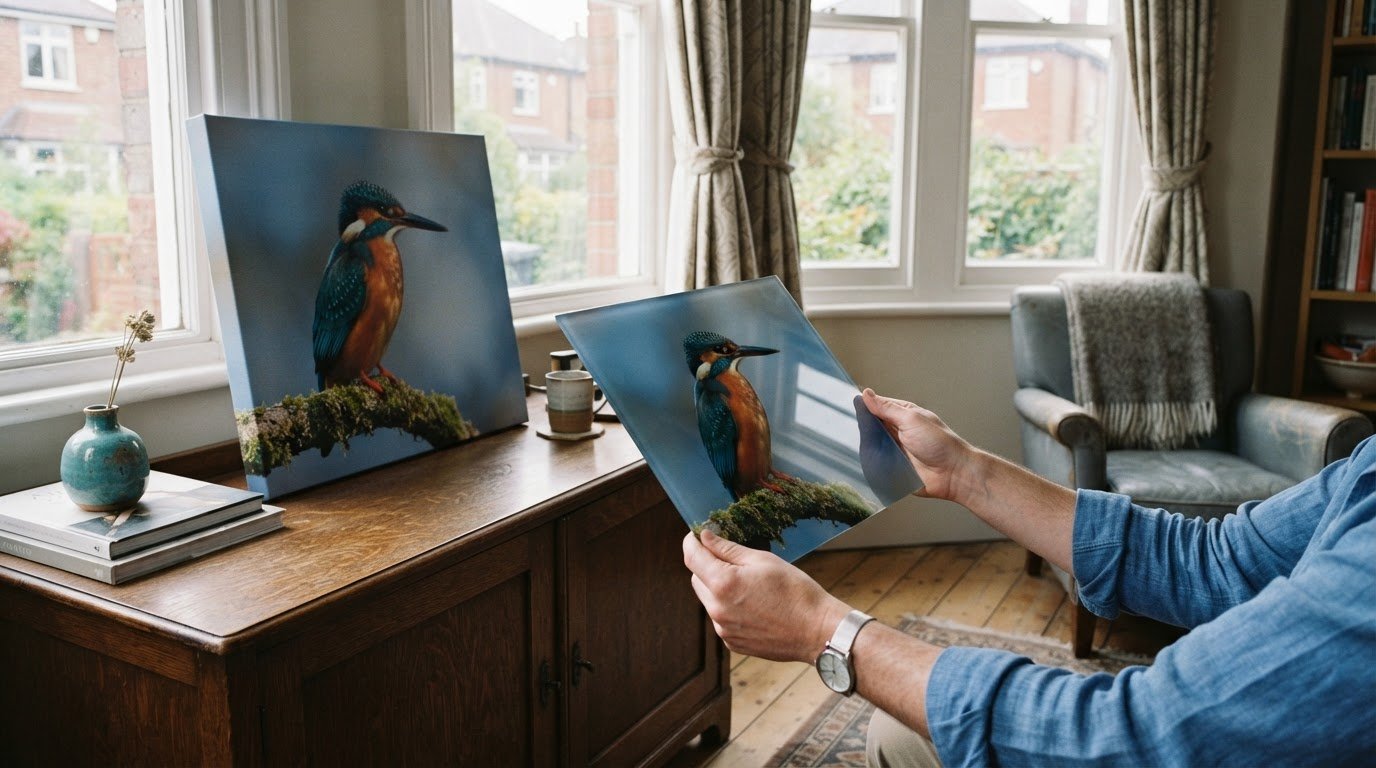
A glossy finish isn’t automatically the better choice. When comparing canvas vs acrylic prints, canvas gives you a softer, textured look with less glare, while acrylic has a smooth, glossy finish. The right option depends on your image, the room’s lighting and the effect you want.
Both can turn a favourite image into an eye-catching display, but each presents it differently. A colourful, detailed photograph may suit a different finish from a softly lit family picture or an artistic image.
This guide compares the materials and finishes, explains which images may suit each, and considers their relative costs. Use the practical points to choose a print that works for your picture and space.
Key Takeaways
- Choose canvas for a softer, textured look with less glare; consider acrylic for a glossy finish and vivid colour.
- Match the print to its surroundings: moisture and direct sunlight can affect how well each material keeps its appearance.
- Use sharp, high-resolution photos to bring out acrylic’s detail; canvas can suit images with minor noise or focus imperfections.
- Canvas is generally the more affordable option, while acrylic’s materials and mounting typically make it cost more.
Acrylic vs Canvas Prints: Which is Better?
Durability depends on both the material and where you display it. Acrylic is more resistant to moisture and UV exposure, while canvas offers a textured, classic look with less glare in a bright room.
Acrylic Print Durability and Care
Acrylic prints can be made by placing a printed image behind a clear acrylic sheet or printing directly onto acrylic. Depending on the acrylic type, it can provide 70-99% UV protection; direct-printed acrylic provides 100% moisture protection. Clean the smooth surface with a soft cloth and avoid harsh chemicals. Bright windows and overhead lights can create reflections.
Neither material is immune to damage. Acrylic can develop fine scratches if handled roughly, while canvas can snag on sharp objects. Acrylic offers greater resistance to moisture and UV exposure, but its smooth surface still needs careful handling.
Canvas Print Durability and Care
Canvas is a fabric surface, so dust, moisture and direct sunlight can affect its appearance over time. Keep it in a dry room, away from heavy humidity and strong sunlight. A canvas image may last several years when protected from dust, humidity and UV exposure. Its textured finish produces less glare than glossy acrylic, making it a practical choice for rooms with windows or overhead lights.
Avoid placing canvas near a steamy bathroom or where bags and sharp objects might catch it. Taking care with placement helps reduce the risk of moisture damage, fading and snags.
In the UK, online print retailers sell both canvas and acrylic prints, whilst professional digital print houses such as קמפוס לדפוס דיגיטלי illustrate how advanced facilities cater to varied format and finish requirements. Before ordering, check the print material, how the image is applied, its care instructions and whether the finish suits the light where you plan to display it.
| Moisture and UV protection | Surface and care | Best suited to | |
|---|---|---|---|
| Acrylic | Strong; protection varies by type | Smooth and glossy; clean gently | Humid spaces and vivid images |
| Canvas | Needs protection from moisture and sunlight | Textured, less reflective; keep dry | Indoor rooms and a classic finish |
Choose acrylic for greater resistance to moisture and UV exposure; choose canvas for a textured finish with fewer reflections in a dry indoor space.
Acrylic and canvas print materials and finishes
With canvas vs acrylic prints, the material changes the surface, colour and overall feel. Canvas has a woven texture; acrylic gives the image a smooth, glossy finish.
Canvas Materials and Construction
Canvas prints are made by printing an image onto poly-cotton canvas, then stretching it over a wooden frame. The fabric’s texture gives photographs and artwork a classic, painterly appearance.
Gallery-wrapped canvas carries the image around the frame’s sides for a finished look without additional framing. Compared with smooth acrylic, canvas can soften fine details and make colours look less intense. A landscape photograph, for example, gains a tactile quality from the visible weave.
Acrylic Materials and Finish
Acrylic prints may use photo paper mounted behind a clear acrylic sheet or an image printed directly onto acrylic. Both methods create a smooth surface, but the image sits differently in relation to the clear material.
The glossy finish can make colours look vibrant and give crisp images a subtle sense of depth. One market comparison claims acrylic can show a 33% increase in colour gamut over canvas. Its reflective surface can affect how the image appears under bright display lighting.
These construction methods affect how each print presents detail. Canvas combines fabric with a wooden support; acrylic uses a clear, rigid layer over or beneath the image. Canvas has a softer, crafted feel, while acrylic gives photographs a clean, bright appearance.
Choosing between canvas vs acrylic prints starts with the character of your image. A brush-textured painting or abstract design can suit canvas, whose fabric complements its artistic feel. A colourful city photograph may benefit from acrylic’s glossy surface if you want its tones to stand out.
For a fabric-based look, explore canvas print designs. For a smooth finish, consider how the production method and room lighting will shape the image’s colours.
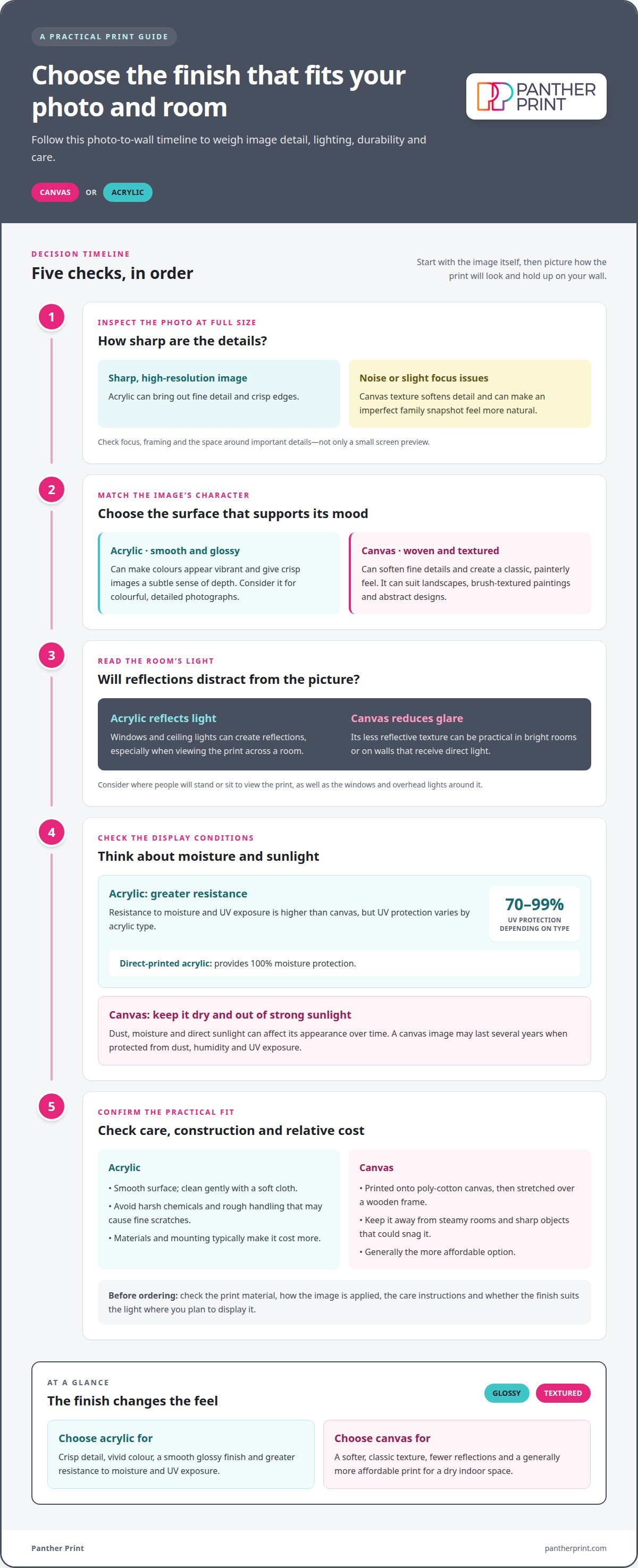
How do you choose based on the photo you are printing?
Choosing canvas vs acrylic prints starts with your image and the room where you’ll display it. Consider the picture’s sharpness, mood and viewing distance before deciding on a finish.
Photo Quality and Print Finish
Acrylic suits sharp, high-resolution photos where fine details and crisp edges matter. Its glossy finish can make colours appear bright and clear, particularly in a detailed city scene or close-up landscape.
Canvas can be forgiving of noise or slight focus issues in mobile photos. Its texture softens detail, so a slightly imperfect family snapshot may look more natural. Review the full image, not just a small screen preview, before choosing.
Print Choices for Settings and Interiors
An architectural photograph can create a polished look in a contemporary office. At home, a softer image may bring a timeless, relaxed feel to a hallway or living room. Match the picture’s mood to the space: a colourful abstract design adds energy, while a muted landscape can feel calming.
Lighting affects how a print looks on the wall. Reflections from windows or ceiling lights can distract from a glossy print, especially when viewed across a room. A less reflective finish may suit a wall that receives direct light. Consider where people will stand or sit to view it.
Consider the print’s purpose, too. A photographer presenting crisp portfolio images may prefer a sleek finish, while a family might choose a warmer look for informal photographs. In commercial or reception spaces, professional visual graphics specialists such as Image Square Printing demonstrate how striking large-format prints can elevate an interior without making the display feel crowded.
Before ordering, inspect your photo at full size. Check the focus, framing and space around important details, then picture the print in its intended setting. Comparing canvas vs acrylic prints this way helps you match the image’s quality to the room’s style and lighting.
Relative cost of acrylic and canvas
Canvas is generally the more affordable format, while acrylic usually costs more because its glossy surface and specialist mounting involve additional materials and production steps. The difference can matter more when choosing a large picture or planning a display with several prints.
Canvas can be a good-value choice for everyday wall art, especially if you want a substantial image without a polished, glossy finish. Acrylic may suit a bright, colourful photograph where gloss is part of the look. Weigh the visual effect against your budget: paying more for a finish you don’t need won’t improve the room.
Posters are another option for a simple display or an image you may change later. Their paper format differs from a mounted canvas or acrylic print, so consider how you’ll display the poster and whether that suits your plans. For a lasting focal point, compare the complete format, not just the printed image.
Framing, mounting and delivery can affect the final amount. Framing depends on the frame material and picture dimensions; mounting depends on the construction, and delivery can depend on parcel size and service. Check what is included rather than assuming these elements are part of the print cost.
To compare value fairly, weigh the print’s size, construction and finish against how you’ll use it. A smaller canvas for a bedroom and a large acrylic centrepiece serve different purposes, so the lowest initial cost may not be the best fit. Consider care, too: acrylic can scratch if handled roughly, while canvas needs protection from moisture and snags.
Set your budget first, then choose the material that delivers the appearance and practicality you want. Explore print options to find a finish that suits your picture and space.
Panther Print
Once you’ve decided canvas suits your room and budget, Panther Print can turn a favourite image or design into canvas wall art. Browse themes including abstract art, wildlife, nursery art and Banksy prints to find a style that fits your space.
Still weighing up the finishes? Consider whether a textured canvas image suits your photo, lighting and preferred style. If you’re leaning towards canvas, explore available subjects and picture how their colours and composition will look on your wall.
For a personal touch, Photo on Canvas lets you make your own photograph the focus of your display. Contact Panther Print to discuss your canvas print choice.
Choose the print that feels at home
Let the image guide your choice. Think about the mood you want in the room, then choose a finish that makes the picture feel at home rather than simply filling a space. The canvas-versus-acrylic decision becomes easier when you imagine the finished display in its setting.
For canvas wall art, Panther Print offers subjects to help shape that feeling, from Abstract Canvas Prints and Animals & Wildlife to Art for Kids & Nursery Art. Choose a design that connects with the room and the people who use it. A thoughtful image can make a familiar corner feel more personal, welcoming and complete.
If you’re ready to explore a canvas print, or want to discuss which print suits your idea, contact Panther Print about your print. Take the next step at your own pace and choose artwork that makes your space feel like yours.
Frequently Asked Questions
Which wall art format has the least glare?
Canvas usually produces less glare because its surface is textured rather than glossy. This can help in a room where daylight shifts across the wall, such as a lounge with a large window. Acrylic may reflect windows or ceiling lights. If glare concerns you, consider where you’ll view the picture from and whether light falls directly on it.
What are the differences between canvas and acrylic prints?
Canvas has an image printed onto fabric, while acrylic prints place the image behind or directly on a clear acrylic sheet. The difference affects both look and feel: canvas has a woven texture, while acrylic is smooth. Canvas gives a hallway display a softer appearance; acrylic offers a sleeker presentation. The material also affects care and suitability for the room.
Which looks better for photographs: canvas or acrylic prints?
Acrylic can suit a crisp photograph when you want fine details and strong colours to stand out. Canvas may feel more natural for a family snapshot or a slightly soft image, as its texture gives the picture a gentler appearance. Consider the photo’s mood as well as its sharpness. A bright travel image and a quiet portrait may call for different finishes.
How do canvas and acrylic prints compare in colour, detail and shine?
Acrylic generally gives photographs a brighter, glossier appearance, while canvas’s texture softens colour slightly. Fine details may look sharper on acrylic, while canvas has a more traditional, artistic feel. Imagine the same vivid seaside photograph in both formats: acrylic makes the colour pop, while canvas creates a gentler, less shiny effect. Your preferred look matters as much as the image.
How much do canvas and acrylic prints cost in the UK by size?
There is no single UK price by size that applies across retailers. Canvas is generally the more affordable format, while acrylic usually costs more because of its materials and mounting. Larger dimensions can also affect the total. Compare prints of the same dimensions, then check whether mounting or delivery is included before deciding which format fits your budget.
Are canvas or acrylic prints suitable for bathrooms and other humid rooms?
Acrylic is generally more resistant to moisture, so it may be better suited to humid rooms than canvas. Keep canvas away from heavy humidity and steamy bathrooms, as moisture can damage the fabric and affect its appearance. Panther Print advises against hanging canvas prints in bathrooms or other steamy environments. For a bathroom, choose wall art designed for those conditions.