
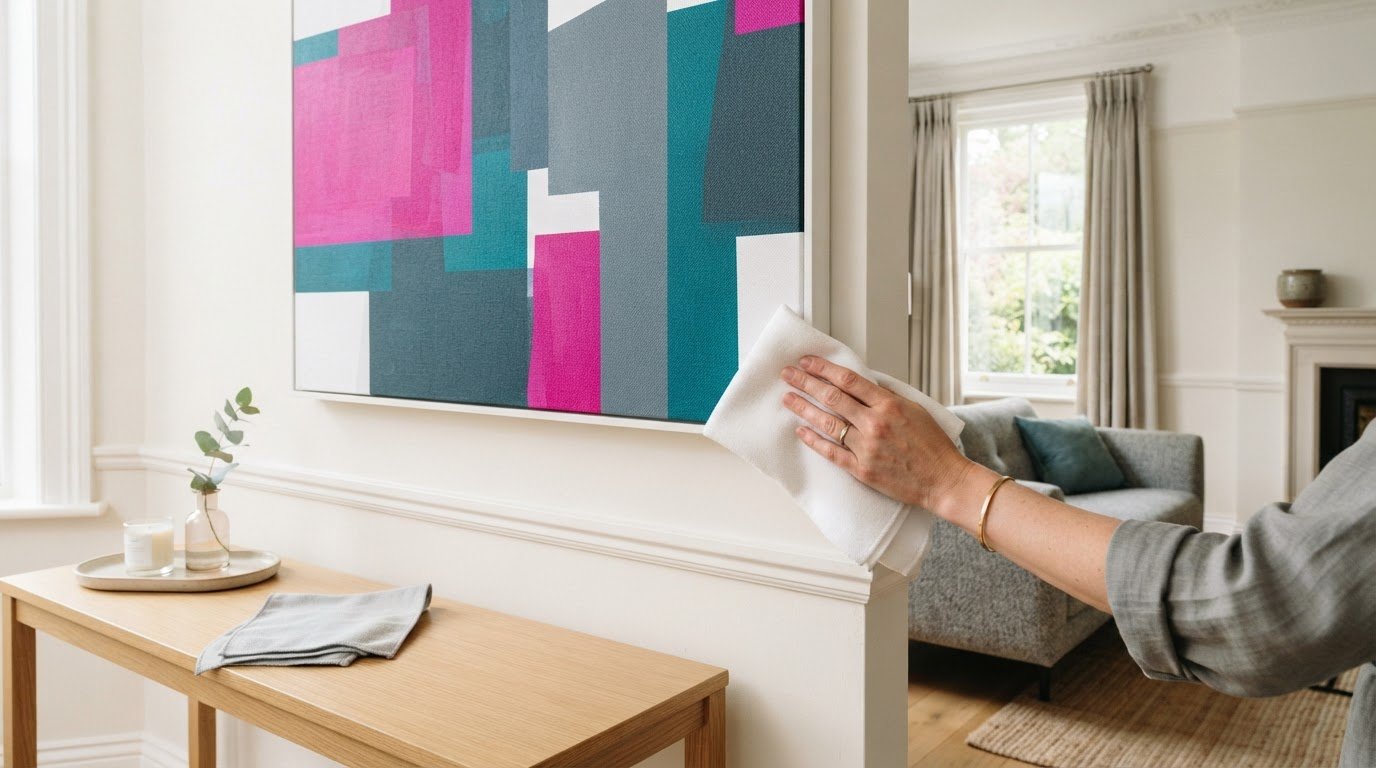
Direct sunlight can fade a canvas print over time, so choose a spot away from strong sun. For canvas print care and cleaning, gently dust with a soft, dry cloth. If dirt remains, use a clean cloth that is barely damp, without rubbing or pressing hard.
It’s tempting to reach for a household spray or wet cloth when marks appear, but moisture and strong cleaners can damage the print. Start with a light touch, and inspect the canvas before cleaning so you can spot damage that needs more care.
Learn how sunlight affects colour, what to check before cleaning, and how to remove stubborn dirt without harsh products or excess moisture. You’ll also find out when to stop, so a simple tidy-up doesn’t become a bigger problem.
Key Takeaways
- Choose a display spot away from strong sunlight, heat and damp to help preserve the print’s colour and shape.
- Inspect the surface before cleaning, and treat deep marks or water damage as signs to stop rather than scrub.
- Start with gentle dry dusting; for stubborn dirt, use a barely damp, soft cloth with a light touch.
- Skip household sprays and abrasive tools, which can harm the canvas or its finish.
Why to avoid damp cloths and cleaning products
Avoid soaked cloths, household sprays and strong cleaners when cleaning canvas wall art. Excess water can affect the ink and stretch the canvas, while chemicals can fade colour or damage the surface.
-
Limit water exposure
Keep moisture to a minimum when cleaning a canvas print. A dripping cloth can leave water on the canvas, which may affect the ink or stretch the material. As it dries, the canvas could warp or loosen. Don’t spray water directly onto the artwork or leave wet patches behind.
-
Avoid harsh and aggressive products
Avoid household cleaners, cleaning sprays and harsh chemicals. They can fade printed colour or damage the canvas surface, leaving marks that may not come off with another clean. Don’t scrub stubborn spots or use a textured sponge: friction can scratch the print, leave patchy colour or damage its surface.
- Keep smoke and airborne grease away from your display. Cigarette smoke can permanently discolour a canvas print, leaving a yellowish haze that cannot be cleaned off. Cooking smoke and grease can also build up over time, so avoid hanging wall art in a kitchen or above a fireplace.
- Choose a spot with stable conditions, away from humidity and heat. Bathrooms can expose canvas to damp air, while radiators and HVAC vents can create heat or airflow changes. Keep the print out of direct sunlight too, since exposure can fade its colours over time. A gallery-style display looks best when its surroundings protect the surface.
Assessing canvas condition before cleaning
- Before cleaning, inspect the whole print in good, even light. Look across the image, then check the edges and corners for scratches, stains, fading, loose canvas, lifted areas or water marks. Note each mark and its position. This gives you a clear picture of the print’s condition before you choose how to care for it.
- Work out whether you’re seeing loose dust or a deeper mark. Dust usually sits on the surface, while a stain or water mark may look embedded, uneven or discoloured. View the area from different angles without rubbing it. If the canvas looks warped or the image appears damaged, don’t treat it like an ordinary dusty spot.
- Consider the print’s value and history before cleaning. For an antique or highly valuable canvas, get professional advice first. A professional conservator can assess a valuable or limited-edition print, as its materials may need specialist care. Severe stains, deep marks and water damage also call for professional restoration, not repeated cleaning at home.
- Test a cleaning method on a small, inconspicuous area before treating the visible image. Apply it gently, then check for changes in colour or surface. Stop if the test area looks or feels different, or shows fresh damage. For a painting or valuable print, seek professional advice before cleaning, even if the mark seems small.
Let the print’s condition guide whether cleaning at home is appropriate. Severe stains, deep marks or water damage are reasons to stop and arrange professional restoration. Don’t try progressively stronger methods on these areas. Base your decision on what you can see, rather than hoping another pass will improve it.
Apply the same caution to an antique or highly valuable canvas. Professional restoration is recommended for these prints, so don’t attempt to clean one simply because the surface looks manageable. If the print falls into either category, leave further treatment to a professional.
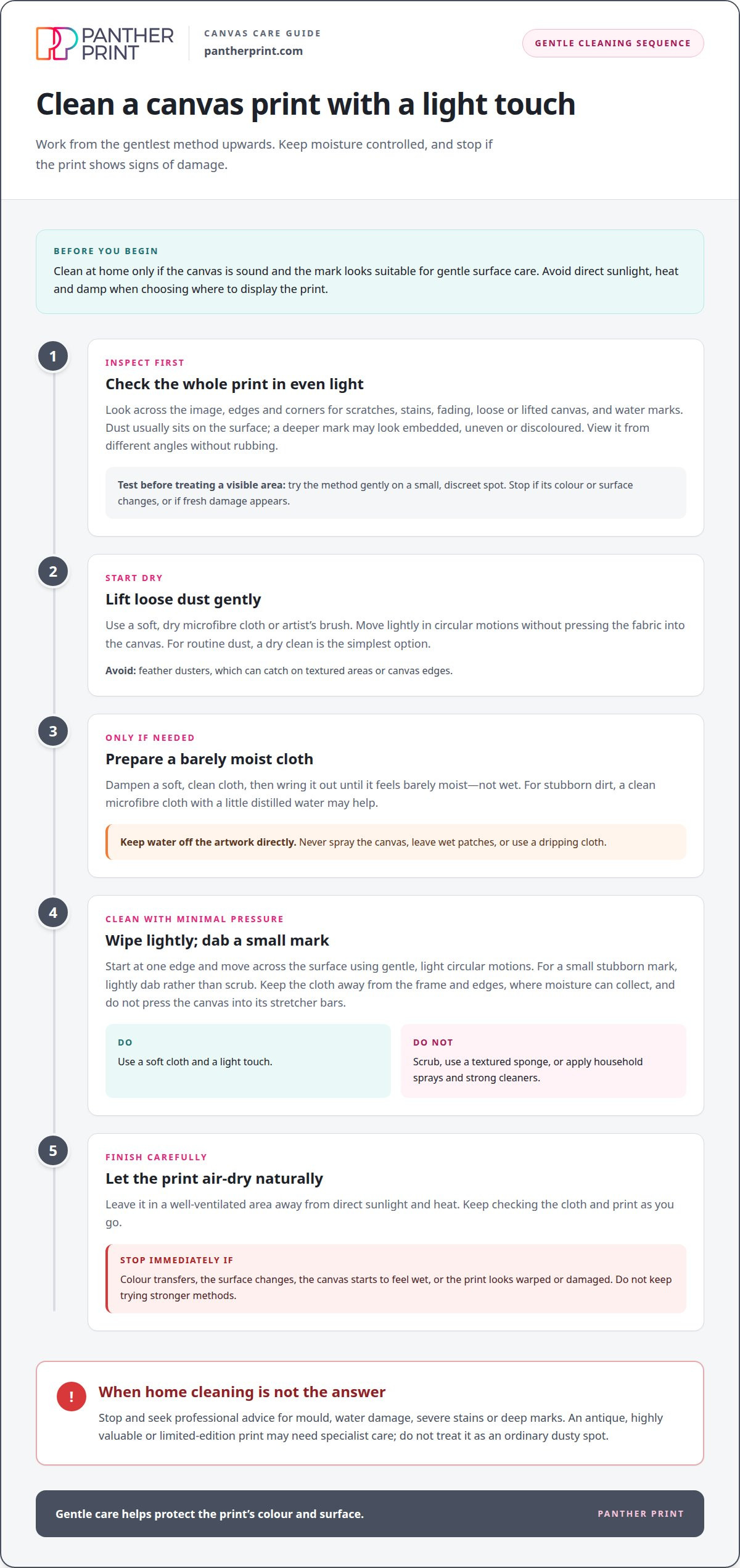
Cleaning a canvas print with a slightly damp cloth
Use a light touch and keep moisture controlled. Work only on a sound, cleanable surface, then let the print dry naturally.
-
Use a slightly damp cloth
Dampen a soft, clean cloth, then wring it out until it feels barely moist. Wipe gently in light, circular motions without pressing on the canvas. Start at one edge and move across the surface, checking the cloth and print as you go. Stop if colour transfers, the surface changes or the canvas begins to feel wet.
-
Address stains and marks
For a small stubborn mark, test your chosen method on a discreet area first. If the test leaves the colour and surface unchanged, lightly dab the mark rather than scrubbing it. Distilled water on a clean microfibre cloth may help with stubborn dirt. Avoid textured sponges, which can scratch the print or leave patchy inkwork.
- Use the same gentle approach on the canvas face of framed and unframed prints. Keep the cloth away from the frame and edges, where moisture can collect. Don’t press the canvas into its stretcher bars. After wiping, let the print air-dry in a well-ventilated area away from direct sunlight and heat.
- Don’t wipe mould with a damp cloth or try to scrub it away. Keep the print away from further moisture and stop cleaning, as adding water risks affecting the canvas and ink. Mould, water damage or a deep stain needs more than routine surface cleaning. Seek professional advice for affected or valuable artwork instead of repeatedly treating the spot at home.
Can you use water or cleaning products on canvas prints?
Use water sparingly and keep household cleaners away from the printed surface. For routine dust, start with a dry, soft cloth.
- Lift loose dust with a soft, dry microfibre cloth or artist’s brush. Move gently in light, circular motions, without pressing the fabric into the canvas. For everyday canvas print care and cleaning, a dry cloth avoids adding moisture when there’s no stuck-on dirt to remove. Don’t use a feather duster, which can catch on textured areas or canvas edges.
- For stubborn dirt, lightly dampen a clean microfibre cloth with distilled water. The cloth should feel barely moist, not wet, and you should wipe gently without pressure. Never spray water onto the artwork. Too much moisture can affect ink or stretch the canvas, so stop if the surface becomes wet.
- For a small stain, dab gently with a solution of mild dish soap and distilled water. Keep the mixture on the cloth, not directly on the print, and avoid soaking one area. Test the method on a discreet spot first. Don’t scrub, even if the mark remains, because friction can scratch the canvas or leave patchy colour.
- Skip standard cleaning sprays, household cleaners and textured sponges. Strong cleaning agents can fade ink or damage the canvas finish; abrasive surfaces can also scratch it. If dry dusting doesn’t shift fingerprints or sticky dust, use a dry-cleaning sponge made specifically for art. Test it on an inconspicuous area before treating the visible surface. This careful approach keeps canvas print care and cleaning gentle and controlled.
Panther Print: Abstract Canvas Prints
Panther Print offers Abstract Canvas Prints to add colour and character to your home or office. If you’re choosing a new piece after refreshing your display, explore abstract designs alongside Animals & Wildlife, Art for Kids & Nursery Art and Banksy Canvas Prints. These ready-to-hang canvas prints bring your chosen subject into a room.
Choose artwork that suits the space, then display it away from direct sunlight, damp and heat. A thoughtful position helps protect the print’s colour and surface. For a personal touch, Panther Print also offers photo on canvas, turning your photograph into wall decor.
Explore Panther Print’s canvas art and contact the team for help choosing a print.
Make your next wall refresh your own
With thoughtful care, a print can remain part of your room as your tastes and surroundings change. Let the artwork guide future decorating choices: a favourite colour, subject or mood can inspire a fresh corner or a new focal wall. Noting what you enjoy about the piece can help you choose a companion that feels personal.
Canvas print care and cleaning can also be a chance to appreciate the image, not just keep it tidy. If you’re planning another wall refresh, Panther Print offers Abstract Canvas Prints, Animals & Wildlife, and Art for Kids & Nursery Art, with designs for different rooms and interests.
Contact Panther Print for canvas advice and take an easy next step towards a home that feels unmistakably yours.
Frequently Asked Questions
Can I hang it in direct sunlight?
No. Choose a wall that isn’t in direct sunlight, as repeated exposure can fade the print’s colours. If sunlight moves across the room during the day, check where it falls before choosing a display spot. A position with steady, indirect light helps keep the artwork’s appearance more consistent over time.
Can I put a canvas in a bathroom or kitchen?
Choose another room. Bathrooms expose canvas to steam and damp air, while kitchens bring airborne grease and cooking smoke. These conditions can affect the print’s surface or cause discolouration over time. A living room, bedroom or hallway away from cooking and bathing areas is a more suitable setting.
Can I use furniture polish or glass cleaner?
No. Furniture polish and glass cleaner are made for other surfaces, not printed canvas. Spraying them onto the image can leave residue or expose the surface to chemicals that affect the ink. Treat canvas differently from a glass-fronted picture: keep polish and window-cleaning products away, and use gentle dry dusting for routine care.
Can a canvas go above a radiator or fireplace?
No. Choose a spot away from heat sources. A radiator can expose the canvas to warmth and moving air, while a fireplace adds heat, smoke and airborne residue. Over time, these conditions can affect the print or discolour it. Look for a wall where the artwork won’t hang directly above a heat source.
How often should I dust a canvas print?
Dust the print when you see a layer forming, rather than following a set schedule. A print in a room where dust gathers quickly will need attention sooner than one in a less-used space. Use a soft, dry microfibre cloth and wipe lightly in one direction. Avoid feather dusters, which can catch on canvas edges.
How should I store a canvas between displays?
Store the print in a cool, dry place with good airflow, away from sunlight. Wrap the canvas in acid-free paper or glassine to protect its surface. Avoid plastic wrapping, which can trap moisture around the artwork. Handle the print by its frame or stretcher bars, not by the canvas face, and keep it away from rough surfaces.