
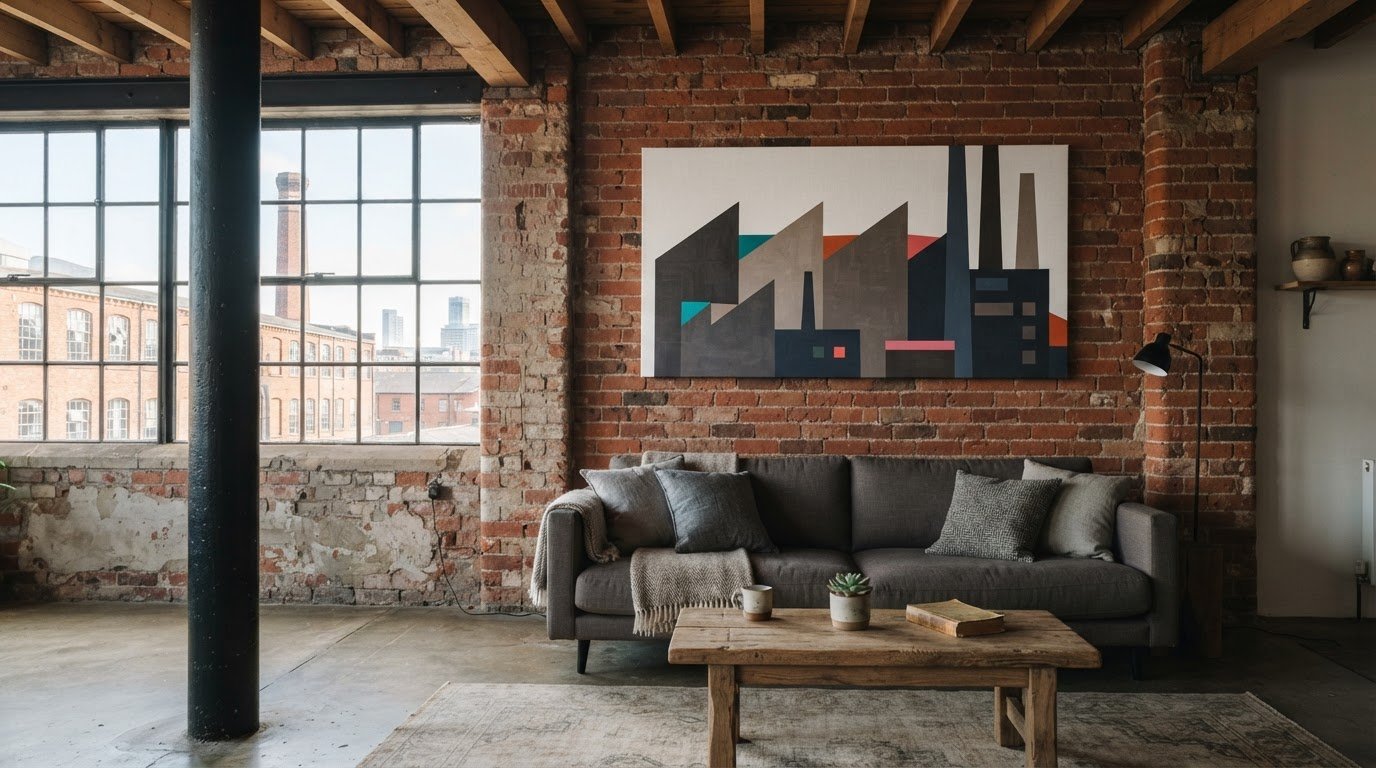
Industrial style wall art can bring warmth and personality to a loft while keeping its urban edge. Choose one bold print as a focal point, or arrange a set across a larger wall. Colour, scale and subject all help the artwork sit naturally alongside exposed brick, metal and wood.
Finding the right balance can be tricky: you want character without clutter, and colour without losing the pared-back mood. This guide explains how to choose prints for industrial-style interiors, from muted abstracts to lively urban scenes. See how a single piece or coordinated set can change a room, and how factory-inspired details can strengthen the look. Start with the wall’s existing materials, then choose artwork that adds contrast, colour or a sense of place.
Key Takeaways
- Use a considered accent colour to enliven neutral brick, metal and wood without overwhelming the room.
- Choose one statement print for focus, or group complementary pieces to suit a wider wall.
- Bring in urban scenes and factory-inspired details to reinforce the loft’s character.
- Explore abstract designs, wildlife, Banksy prints or nursery art at Panther Print to find a subject that suits your space.
Adding colour to neutral industrial interiors
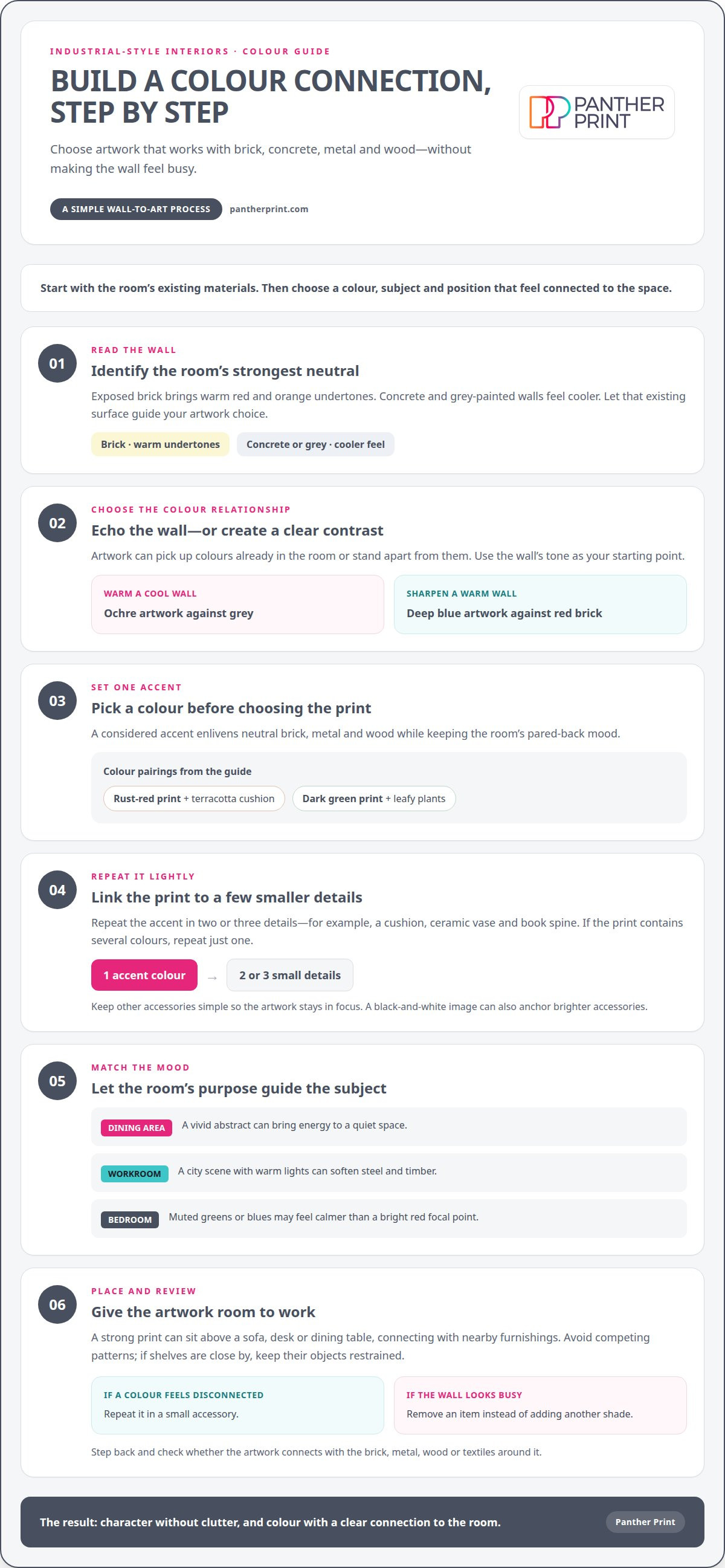
Connect artwork with the rest of the decor by repeating one of its colours in nearby objects. Pair a rust-red print with a terracotta cushion, or a dark green print with leafy plants. Keep other accessories simple so the artwork stays in focus.
Start with the room’s strongest neutral. Exposed brick brings warm red and orange undertones, while concrete and grey-painted walls feel cooler. Choose artwork that echoes those colours or creates a clear contrast. For example, ochre can warm a grey wall, while deep blue can sharpen the look of red brick.
Choose an accent colour before you pick a print, then repeat it in two or three smaller details, such as a cushion, ceramic vase and book spine. Introducing functional accent pieces from Artistry Deco Shop can help create this visual link without making every surface match. If the print contains several colours, repeat just one. A black-and-white image can also anchor brighter accessories.
Balance colour with the artwork’s subject. A vivid abstract can bring energy to a quiet dining area, while a city scene with warm lights can soften a workroom’s steel and timber. In a bedroom, muted greens or blues may feel calmer than a bright red focal point. Let the room’s purpose guide the mood.
Give colour room to work by choosing the right position. Hang a strong print above a sofa, desk or dining table, where it can connect with nearby furnishings. Avoid surrounding it with competing patterns. If the wall already has shelves, keep nearby objects restrained. A few books or a simple lamp from Ergovanta add texture without crowding the artwork.
For a final check, step back and look at the whole wall. See whether the artwork connects with the brick, metal, wood or textiles. If a colour feels disconnected, repeat it in a small accessory. If the arrangement looks busy, remove an item instead of adding another shade.
The Neutral Brushstrokes I painting measures 91 cm high and 91 cm wide, offering a square format that can sit comfortably above nearby furniture.
Single- and multi-piece artwork
A single print gives a loft wall a clear focal point. It works well above a sofa, desk or dining table, where the furniture already defines the space. Choose an image with a strong shape or subject, then let the surrounding brick, timber or concrete provide breathing room. One well-placed piece can feel deliberate without crowding the wall.
Scale matters. The Lunch Atop Skyscraper wrapped canvas measures 61 cm high and 81.3 cm wide. That landscape shape can suit a broad wall or sit above a low piece of furniture. A smaller print may suit a narrow wall, alcove or space between architectural features. Match the artwork’s proportions to the wall area, rather than judging size from the image alone.
A group of prints can spread interest across a wider wall. Bring them together through a shared subject, colour or visual style. For example, city scenes can form a connected display, while different abstract works can share similar tones. Balance the arrangement with the furniture below, and leave enough visible wall between pieces for each image to stand out.
Plan the layout before hanging. Arrange the prints on the floor first, then adjust their order and spacing. Check how the edges align and whether one image dominates. A mix of portrait and landscape formats can feel lively, while repeated proportions create a calmer rhythm. Align the arrangement’s centre with the sofa or table beneath it.
For a more layered look, combine a main print with smaller pieces nearby. The Imprint III paper print measures 50 cm high and 34 cm wide, offering a different proportion from the larger Lunch Atop Skyscraper example. Use size contrast to create a natural order: let the main image catch the eye, then place supporting pieces around it. This approach gives an industrial wall a considered finish without relying on extra decor.
Urban and factory-inspired aesthetics
Industrial wall art often pairs urban subjects with metal, iron, wood or paper. Designs may feature city buildings, factory details, machinery or transport. Each subject creates a different mood: a skyline suggests movement, while old machinery gives a room a workshop feel.
Choose imagery that connects with the room’s features. A print of warehouse windows can echo steel-framed glazing, while a bridge or railway scene can suit a loft with visible beams. For a quieter effect, choose a close-up of weathered brick or worn metal. These details add texture without introducing another strong colour.
Factory-inspired artwork can also have a sculptural quality. A UK Government example of industrial-inspired art uses a riveted steel collage on board, arranged as two vessel-like forms. It shows how visible joins and industrial materials can become part of a design. At home, a print depicting rivets, bolts or layered metal can suggest a similar construction.
Keep the mood balanced. A dramatic smokestack image can make a striking feature above a simple desk, while a detailed machine print can add interest to a calmer sitting area. Pair bold imagery with plain furnishings so the subject remains easy to read. If the room already has busy brickwork or exposed pipework, choose a simpler composition.
Think about the story you want the wall to tell. A black-and-white street photograph can create a documentary feel, while a vintage transport illustration adds a collected, nostalgic note. Architectural drawings offer crisp lines; abstract shapes can suggest factory forms without depicting a particular building. Match the artwork’s tone to the room’s purpose.
Before choosing, identify one feature to echo, such as a steel beam, timber surface or brick wall. Then select a print with a related subject or texture. Keep the connection subtle rather than literal. One repeated detail can tie the artwork to the room and make its urban character feel considered.
Loft and industrial-style wall art prints
Available sizes range from compact prints to broad statement pieces. Examples include a canvas measuring 20.5 cm high, 31 cm wide and 4 cm deep, and an abstract canvas measuring 122 cm high and 81 cm wide. These examples show why measuring the wall area matters before choosing.
For a living room, try a city photograph or bold abstract above the sofa. A landscape or black-and-white print can bring a calmer note to a bedroom. Choose a subject and scale that suit the room, then keep nearby furnishings from competing for attention.
Measure the wall’s usable space rather than its full width. Leave room around doors, shelves and light switches. Compare the print’s shape with the furniture below: a square design can balance a wide sofa, while a portrait format can suit a narrow section beside a doorway.
Industrial-style wall art works best when its subject connects with the loft’s details. Choose architectural photography to echo steel-framed windows, or an abstract print to soften exposed brick. In a bedroom, muted forms can keep the look restful. In a living room, a graphic city scene can create a stronger focal point.
For heavy metal or framed artwork, match the fixings to the wall and the item’s weight. Follow the artwork and fixing instructions, and use suitable supports for brick, masonry or plasterboard. Don’t rely on a small picture hook for a heavy piece.
Check the position before hanging. Mark the centre point, then consider how the artwork sits with the bed, sofa or mantel. A print that feels balanced from the room’s main viewing position will help the space look considered rather than crowded.
Explore industrial-inspired canvas prints to find artwork that suits your loft’s scale, subject and mood.
Browsing by material can help narrow your choice: industrial-style filters include metal, iron, wood and paper. Compare these materials with the room’s existing surfaces and furnishings, then decide whether the print should blend in or stand out.
The listing shows 8,622 industrial wall art items, so using material alongside subject and scale can make the search more focused. Keep the final choice consistent with the loft’s overall mood.
Panther Print
Panther Print’s canvas artwork can suit your loft’s mood and available wall space. Browse subjects such as abstract designs, wildlife, Banksy prints and black-and-white imagery. Each offers a different feel, from graphic contrast to a relaxed, natural touch.
Use the room’s colours, materials and focal point to guide your choice. A bold print can stand out against a simple wall, while a quieter image can sit comfortably among exposed brick and timber. Choose artwork that feels connected to your space, rather than in isolation.
Explore Panther Print’s canvas options when you’re ready to turn your ideas into a finished wall. Contact Panther Print to discuss your wall art needs.
Make your loft feel like yours
Choose a print for the way you want the room to feel, not just how it looks in a photograph. It can bring a personal interest into view, soften a stark corner or create a fresh focal point in a familiar space. Pick something you’ll enjoy living with every day. That personal connection makes industrial style wall art feel at home, rather than simply matching the room’s materials.
Panther Print offers Abstract Canvas Prints, Animals & Wildlife, and Art for Kids & Nursery Art. These subjects can help you find a personal piece, whether you’re refreshing a shared living space or adding character to a bedroom. Start with an image you love, then build the room around it at your own pace.
Ready to explore a new look for your walls? Contact Panther Print about your wall art and take the next step towards a space that feels unmistakably yours.
Frequently Asked Questions
What is industrial style wall art?
Industrial style wall art draws on the look and feel of working spaces, city streets and built structures. It might feature architectural photography, machinery-inspired forms or bold, pared-back graphics. The style doesn’t require an actual metal artwork: a printed image can create the same urban mood. Look for strong lines, weathered textures or a subject connected with industrial spaces.
How do I choose industrial wall art for a room?
Choose a piece that suits the room’s purpose and viewing distance. In a hallway, a clear architectural image can catch the eye as people pass; above a bed, a quieter design may feel more restful. Consider the wall’s shape, the surrounding furniture and whether the artwork should blend in or stand apart. A personal photograph can add an individual touch.