
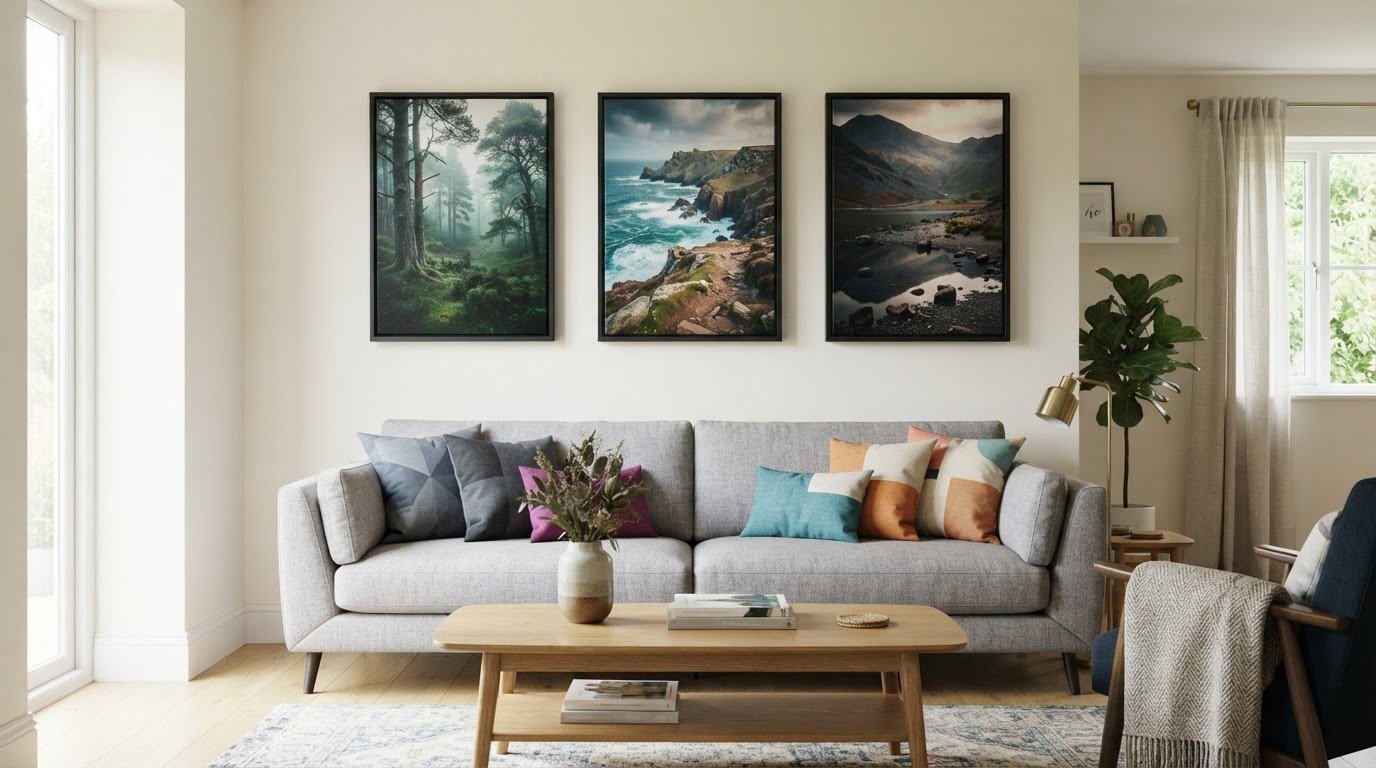
What if the best landscape for your wall isn’t the one that matches your cushions, but the one that changes how the room feels? Choosing landscape canvas prints can feel tricky when you’re unsure whether a misty woodland, open coastline or bold mountain scene will suit your space. Colours can also look different on screen from how you imagine them on your wall.
You don’t need to know art jargon to make a confident choice. Start with the mood you want, then consider the scene’s colours, composition and style. This guide will help you compare landscapes and picture the finished effect before you choose. Whether you’re looking for a calm bedroom, a brighter living room or a striking focal point, a few practical checks can make browsing easier.
Key Takeaways
- Choose the feeling you want the room to have, then use it to guide your landscape subject.
- Notice the scene’s main colours and focal point to judge whether it will feel calm, striking or visually busy.
- Compare photographic, painterly, abstracted and illustrative styles to find the look that feels right for you.
- Consider what you’ll see from your main seating or resting spot before settling on a scene.
- Browse landscape canvas prints with your mood, subject and room in mind. Panther Print’s handmade prints are ready to hang.
Landscape canvas prints: begin with the feeling you want in the room
A landscape can feel peaceful, dramatic, uplifting or expansive before you’ve taken in every detail. A quiet stretch of water might invite a slower pace, whilst a sky full of shifting clouds can bring movement and energy. Start with the feeling you want from the room, rather than a rule that says a certain style belongs in every home.
What counts as a landscape canvas print?
Landscape canvas prints are scenic images reproduced on canvas for display as wall art. The subject might be a rugged coastline, mountain peaks, leafy forest, open countryside or a wide, changing sky. Some scenes look like photographs; others have a painterly, abstracted or illustrative appearance. The subject is only part of the picture: the way it’s depicted gives it a distinct character.
A landscape print’s character comes from what it shows and how that scene is treated. A familiar view can feel lifelike in a photograph, soft and expressive with visible brushwork, or open to interpretation when shapes and colours are simplified. If you’re curious about the broader history and styles of landscape painting, this overview offers useful background on how artists have pictured the natural world.
There’s no need to choose the most realistic image or the most fashionable treatment. Think about what holds your attention. Perhaps you enjoy fine details, or maybe you’d rather have a scene that feels loose and suggestive. That first reaction is a helpful clue, not a test of artistic knowledge.
What feeling should the landscape bring to the room?
Picture where the print will hang and what you’d like to feel when you look at it. An open horizon, with sea or fields stretching into the distance, can suggest space and a sense of escape. It won’t change the room’s actual size, but the broad view may make the wall feel less enclosed. A close view of trees can feel sheltered and restful; quiet water may seem still and reflective.
For more drama, look towards bold skies, steep mountain shapes or a coastline with strong contrasts. These scenes tend to draw the eye and can create a livelier focal point. Softer light and gentler forms may suit a space where you want to unwind. Neither choice is automatically better. The right one is the scene you’ll enjoy living with.
Try this simple check: imagine seeing the picture during an ordinary day, not just when you first choose it. Would you welcome that misty woodland while getting ready for bed? Would a bright, wide-open view feel uplifting above the sofa? Follow your own response. A landscape should feel at home with you, not just with a decorating rule.
How colour, composition and light change a landscape canvas print
Two pictures of the same coastline can feel completely different on a wall. One might use soft, muted tones and leave plenty of open space; another could fill the view with sharp contrasts, rocks and rolling waves. Colour, composition and light all shape how a scene catches your eye and sits alongside the rest of the room. Look beyond the subject and notice how the image is put together.
Read the colours in the scene before you choose
First, pick out the main colour family. Is the landscape mostly blue and grey, warm with ochre and brown, or rich in green? Compare those colours with the wall and nearby furnishings. A soft green scene might echo a plant or favourite armchair, whilst a golden sunset could bring warmth to a room with cooler tones.
Matching isn’t essential. A contrasting colour can make the print stand out as a deliberate accent, even if it doesn’t appear elsewhere in the room. Decide whether you’d prefer gentle harmony or a noticeable splash of colour, then browse with that preference in mind. For a straightforward introduction to how colours work together, explore these principles of colour theory in art.
Think about light, too. Colours can look different in bright daylight than in softer evening light or under lamps. A blue-grey sky may appear crisp by day and more subdued later on. If you’re choosing online, view the image on a screen in the room where you plan to hang it, then consider how its tones might look at different times. This is a useful sense check, not a promise that the screen will show the exact colour you’ll see on the wall.
Find the focal point and visual pace
Notice where your eye lands first. It might be a mountain ridge cutting across the view, a pale strip of coastline or a bright patch of sky. A clear focal point gives the image an easy place to begin looking. In a busier scene, several details may compete for attention, such as layered trees, scattered buildings and changing cloud shapes.
Colour balance sets the tone, whilst composition guides your eye around the scene. Broad areas of sky, water or open fields often give the eye room to rest. Layered details can make a landscape feel lively and draw you in for a closer look. Neither approach is automatically calmer or better; it depends on the room and the kind of image you enjoy spending time with.
Try this quick test: glance at the image, look away, then look back. Does your eye settle naturally on one feature, or keep moving between several? If you want a quieter impression, you might favour a simple arrangement and softer contrast. If you enjoy a more energetic picture, a layered view with stronger changes in light and colour may hold your attention. Keep these preferences in mind as you browse landscape canvas prints.
Which landscape canvas print style suits your taste?
The same view can look true to life, softly expressive or almost dreamlike, depending on how it’s pictured. That’s why style matters as much as subject when you’re choosing landscape canvas prints. There’s no single treatment that suits every room or person. Compare a few examples you’re drawn to and notice which ones you’d be happiest seeing day after day.
Photographic landscapes or painterly scenes?
Photographic landscapes show recognisable details, from ripples on a lake to the texture of a rocky hillside. Natural light and realistic colours can make a familiar scene feel immediate. Painterly treatments may use brush-like marks, softened edges or an interpretive touch. Look at both approaches and ask yourself which feels more at home amongst your furnishings and the rest of your décor.
- Photographic: A lifelike view with recognisable details and a sense of natural light.
- Painterly: A more expressive impression, sometimes with visible brush-like effects or softened forms.
- Abstracted: A less literal view, where shapes, colours or parts of the scenery are simplified.
- Illustrative: A drawn or designed appearance that can make a landscape feel clear, graphic or story-like.
Naturalistic, abstracted or illustrative views
Naturalistic scenes keep the scenery easy to recognise, whilst abstracted views reduce detail into broader shapes and colour areas. Illustrative landscapes can sit between these approaches, depending on how much detail they include. Compare the artwork with patterns and decorative objects already in your room. A detailed view may add plenty to look at; a simplified one may feel less visually busy.
Think about how much you enjoy working out details in a picture. A recognisable mountain path or line of trees gives your eye clear landmarks. With a more abstracted treatment, the appeal may come from the overall arrangement rather than a precise place. If less literal imagery catches your attention, explore abstract canvas prints as a related direction.
Make a small shortlist rather than deciding from one example. Put a photographic coast beside a painterly woodland, then compare each with an illustrative or abstracted view. Notice what feels familiar, what feels fresh and what competes with the room’s existing patterns. Save a few favourites and return to them later; sometimes the image that still appeals after a pause is the one with the right feel.
Keep your own taste in charge. A realistic scene isn’t automatically more suitable for a traditional room, and an abstracted view isn’t reserved for modern décor. The style can echo the room’s character or bring in an interesting difference. Choose the treatment that makes the landscape feel like a view you’d enjoy having around, not simply the one you think you’re supposed to prefer.
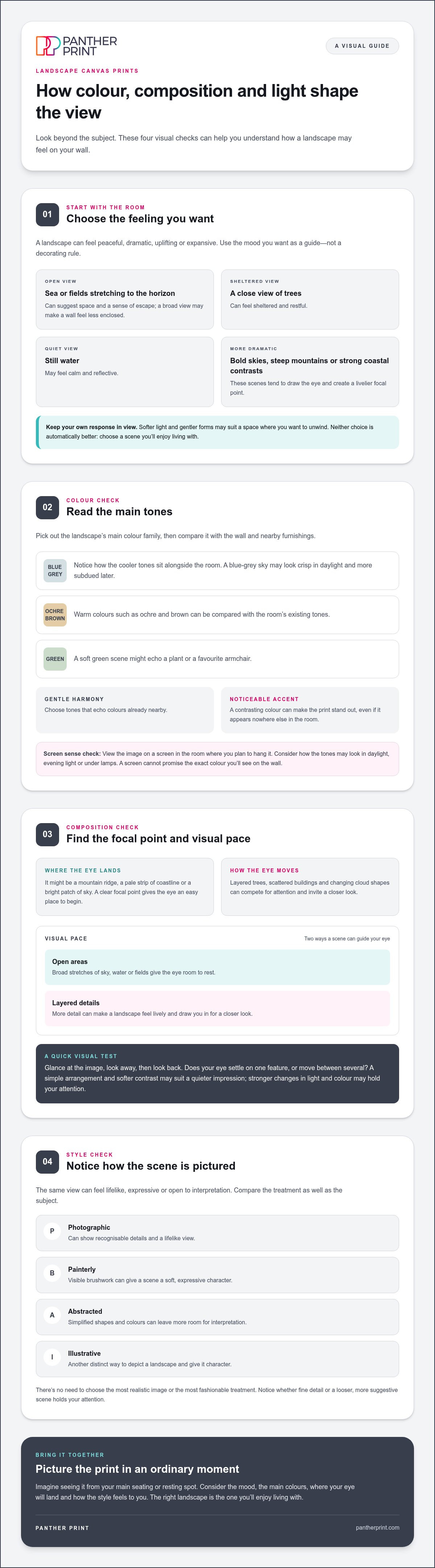
How to choose landscape canvas prints for your room
Turn your preferences into a simple plan. Think about how you use the room, what you’d like the picture to bring to it and how the scene will sit with the things already there. To judge the scale, measure the available wall space and use paper or masking tape to mark out the print’s dimensions before you buy. This makes it easier to picture the artwork in place without relying on guesswork.
- Name the mood. Choose a feeling you’d like to welcome into the room, such as calm, warmth or energy. Keep it personal, rather than choosing a mood because you think it’s expected for that space.
- Choose a scene. Narrow your search to a subject you enjoy looking at, whether that’s a coastline, woodland, open countryside or another view. Consider whether you’d prefer a familiar, detailed landscape or a simpler interpretation.
- Compare its colours. Notice the main tones and decide whether you want them to sit gently with the room or add a distinct contrast. You don’t need to match every cushion or accessory.
- Review the room. Picture the print on the intended wall alongside furniture, nearby artwork and decorative details. Consider its visual balance, then imagine how it will look from the room’s main seating or resting spot.
Match the scene to the room’s everyday use
Think about what usually happens in the space. A bedroom may be where you want to unwind; a living room might bring people together for conversation, family time or a quiet evening. If you work in the room, consider whether you’d enjoy a restful view during the day or something with a livelier feel. These are prompts, not rules. Your own preference matters most.
Quieter imagery may suit a softer impression, whilst a scene with movement or strong contrasts can bring welcome energy to a sociable space. But a peaceful landscape can work beautifully where people gather, and a bold view may be just right for a restful room if it makes you happy. Let your everyday use guide you, then trust your response to the picture.
Check the print against the wall and surrounding décor
Look at the intended wall as part of the whole room, not in isolation. Notice the nearby furniture, other artwork and existing colour accents. Ask whether you want the landscape to blend into that setting or stand out as a point of interest. Consider the print’s dimensions against the wall space, and what catches your eye from your favourite seat. A view that feels pleasing from there is one you’re more likely to enjoy regularly.
Browse with this checklist: mood, scene, colour, room and the view from where you sit. Once you’ve narrowed down the landscape and style that feel right, browse landscape canvas prints and see which scenes suit your space.
Explore landscape canvas prints and choose a view you’ll enjoy
You’ve now got a simple way to narrow your choice: begin with the mood you want, find a subject you enjoy, then consider its colours, visual detail and place in the room. The best scene isn’t necessarily the one that follows a decorating trend. It’s the one that feels right to you and works on the wall where you’ll see it.
Use a quick checklist before you decide
Before settling on a favourite, pause and ask yourself:
- Can you describe the atmosphere or feeling you’d like the image to bring?
- Does the landscape subject appeal to you, and do its colours and level of detail suit your taste?
- Have you pictured how it will sit beside the room’s furniture, artwork and existing colour accents?
- Do you like the view from the main place you sit or rest?
Your answers don’t need to be complicated. “A quiet scene with soft colours” is a useful guide. So is “a lively view that catches my eye from the sofa”. If you’re choosing between a few options, compare them against the same questions. This helps you focus on what matters, rather than getting caught up in endless browsing.
Find a landscape image that feels like yours
Trust the scene you keep coming back to. It might be a recognisable stretch of countryside, a dramatic coastline or an imaginative view with simplified shapes. Landscape imagery ranges from familiar natural scenes to interpretive treatments, so you can choose a picture that feels lifelike, expressive or somewhere in between. Your own response is a better guide to what you’ll enjoy seeing every day than a passing trend.
It can also help to picture the artwork as part of an ordinary moment. Imagine noticing it whilst relaxing after work, sharing a meal or passing through the room. Does it feel restful, uplifting or simply pleasing to look at? There’s no need to find a scene with a grand meaning. A view that brings you a small moment of enjoyment can be the right choice for your home.
Panther Print’s wall-art catalogue includes handmade, ready-to-hang landscape canvas prints. Once you know the mood, subject and style you’re looking for, browse the scenic images and see which one feels personal to you. Explore Panther Print’s landscape canvas prints and find a view you’ll be glad to come home to.
Choose a view that keeps speaking to you
Give your favourite scenes a little time. The image that feels right isn’t always the one that makes the strongest first impression. Notice which view you still enjoy returning to, and imagine it becoming part of familiar moments in your home. That lasting connection matters more than choosing a picture simply because it’s popular.
As you browse landscape canvas prints, let your own response lead. You might be drawn to a place that reminds you of a favourite walk, or to a view that offers a welcome change of pace from the everyday. There’s no need to overthink it. If a scene feels good to look at and sits comfortably in your mind’s eye in your room, it’s worth considering.
Ready to find a view that feels like yours? Explore Panther Print’s landscape canvas prints and choose a handmade print for your home. Trust your taste, enjoy browsing and select a scene you’ll be glad to see each day.
Frequently Asked Questions
Can landscape canvas prints work in a room with patterned wallpaper?
Yes. Think of the wall as a shared composition: wallpaper and artwork can complement one another without matching exactly. If the pattern is large or colourful, a landscape with fewer prominent details may give the eye a place to rest. Alternatively, pick out one colour from the wallpaper in the artwork for a subtle connection. View the wall from the doorway as well as nearby, since the overall effect can change with distance.
Which landscape canvas print is best for a room with little natural light?
There’s no single best choice, so consider the room’s usual lighting before settling on a scene. A print with pale areas may feel lighter than one dominated by deep tones, but it won’t necessarily make a dim room brighter. Look at possible choices under the lamps you use most often, and consider whether the artwork’s colours feel comfortable beside the wall and furniture after dark.
Are landscape canvas prints suitable for modern interiors?
Yes. Landscape canvas prints can feel at home in a modern interior if the image works with the room’s overall look. For instance, a clean-lined room with plain furnishings might suit a scene with a clear arrangement, whilst an expressive landscape could bring a more relaxed note. There’s no need to choose only abstract or minimalist artwork. Let the room offer clues, then pick the landscape you genuinely like.
How do I choose between a landscape photograph and a painted scene?
Choose by the kind of presence you want the image to have. A photograph can make a particular place feel recognisable, with details such as cloud shapes or distant buildings. A painted scene may feel more interpretive, depending on its treatment. To compare, view both options at the same time and ask which one holds your attention without feeling out of place among your room’s existing pieces.
Can I mix landscape canvas prints with other wall art?
Yes. A group of different artworks can feel connected through a shared colour, subject or mood, even if the images aren’t alike. For example, you could bring a landscape together with botanical artwork, or balance a peaceful scene with a more graphic piece. Before arranging them, lay the pictures out on the floor to try different groupings. This makes it easier to spot gaps or areas that feel crowded.
What should I look for in a landscape scene before choosing a print?
Look for a scene that holds your interest beyond its first impression. Notice what you remember after looking away: the line of a path, a patch of light or the shape of a distant ridge. That detail can help you tell whether you enjoy the picture itself, rather than simply liking its colours. Ask whether you’d still want it in view when the room is being used for its everyday purpose.
Do landscape canvas prints have to show a real place?
No. A landscape can show a recognisable location, an imagined setting or a stylised view that borrows elements from nature. A familiar coastline or mountain scene may appeal if you like clear landmarks; simplified scenery can suit you if you prefer suggestion over exact detail. You don’t need to identify the place for the artwork to feel meaningful. Choose the kind of view you enjoy returning to.