
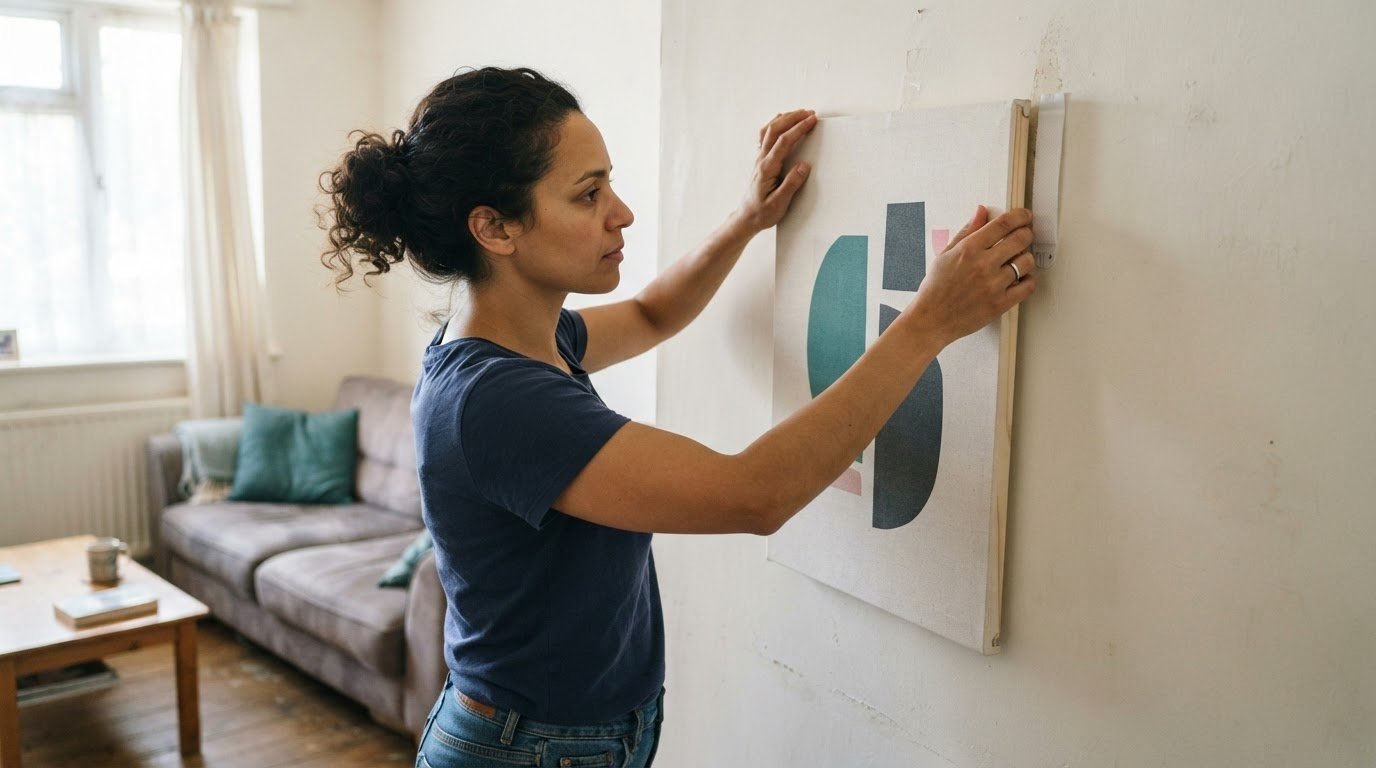
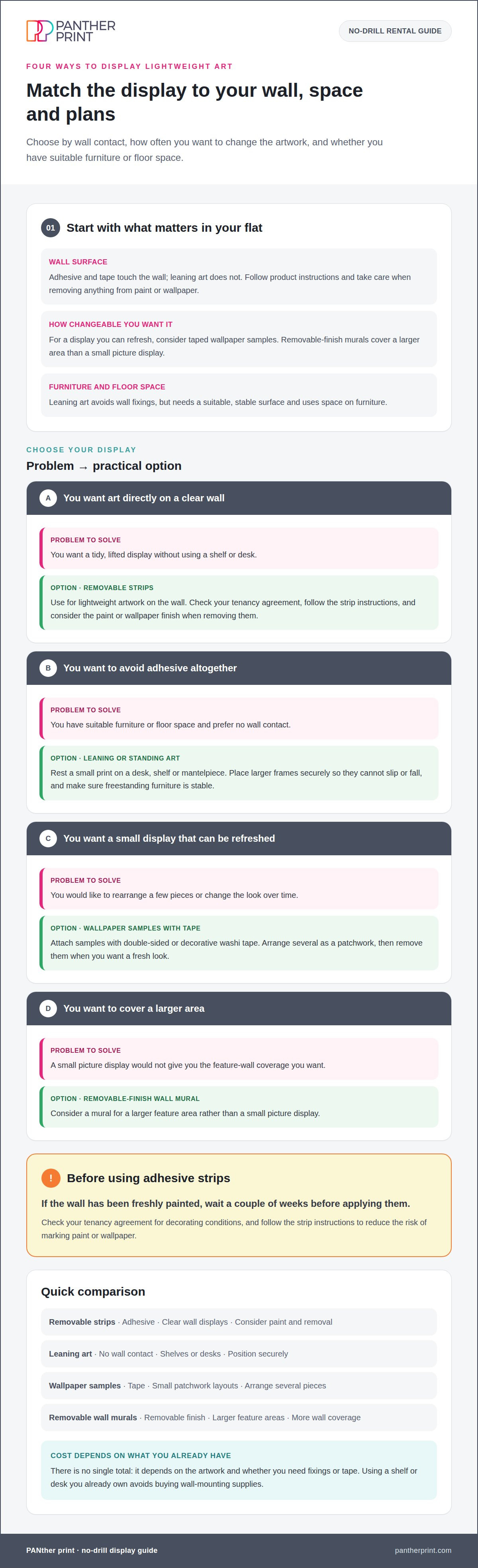
The best no-drill display depends on the room and wall. For lightweight wall art for a rented flat, choose between removable strips, art resting on furniture, taped wallpaper samples or another display method based on the surface and how often you want to change it. If a wall has been freshly painted, wait a couple of weeks before applying adhesive strips.
You can add a personal touch without risking holes, and you don’t have to settle for bare walls. A little planning helps you match the display to the room, from calm bedroom prints to cheerful art in a child’s space.
Compare no-drill options for your rental, find artwork ideas room by room, and use masking tape to test placement before deciding. A few considered choices can make a flat feel more like home without turning decorating into a big job.
Key Takeaways
- Match the hanging method to your wall and how often you want to change the display, rather than choosing by convenience alone.
- Give each room its own feel by pairing artwork themes with the space and the mood you want to create.
- Use masking tape to preview the layout before hanging, and size a display above a sofa in proportion to the furniture.
- Compare lightweight materials by their look, placement and upkeep to find an option that suits your flat.
Which no-drill wall décor idea is best for different renter situations?
Choose a display method based on the wall surface, how often you’ll change the artwork, and whether you have suitable furniture or floor space. Each option works best in different rental homes.
Removable adhesive strips
Removable strips let you display lightweight artwork directly on a wall, keeping it off shelves and furniture. They suit a tidy, lifted look, but the wall finish and careful removal matter. Follow the strip instructions to reduce the risk of marking paint or wallpaper. If the wall has just been painted, wait a couple of weeks before applying adhesive strips. Check your tenancy agreement for decorating conditions.
Lightweight art that leans or stands
Leaning art needs no wall fixing, making it useful if you want to avoid adhesive altogether. Rest a small print on a desk, shelf or mantelpiece. Place larger frames somewhere stable where they cannot slip or fall. This option requires suitable furniture and uses its surface, unlike a wall-mounted display. Take care that freestanding furniture remains stable for your room and household.
For a changeable wall display, attach wallpaper samples with double-sided or decorative washi tape. Arrange several as a patchwork, then remove them when you want a fresh look. Removable-finish wall murals cover a larger area, so choose one for a feature wall rather than a small picture display.
How much do lightweight wall art options cost in the UK? There’s no single total: it depends on the artwork and whether you need to buy display fixings or tape. Using a shelf or desk you already own avoids buying wall-mounting supplies.
Can you display art without wall fixings? Yes. Place lightweight prints on existing furniture, and position larger leaning frames securely to prevent slips or falls.
| Option | Wall contact | Best suited to | Consideration |
|---|---|---|---|
| Removable strips | Adhesive | Clear wall displays | Paint and removal |
| Leaning art | None | Shelves or desks | Stable positioning |
| Wallpaper samples | Tape | Small patchwork layouts | Several pieces to arrange |
| Removable wall murals | Removable finish | Larger feature areas | More wall coverage |
Choose strips for a clear wall, leaning art for existing furniture, or taped samples and murals for changeable wall coverage.
Choosing décor for different rooms
Start with the room’s purpose, then choose a subject, colour and scale to suit it. Choosing lightweight wall art for a rented flat room by room helps each space feel considered, rather than decorated with the same idea throughout.
In the living room, create a focal point near the sofa or reading chair. A landscape can soften a neutral scheme, while bold abstract shapes add colour to plain walls. Choose an image that’s easy to see from the main seat. In a shared space, pick a subject that connects with cushions, curtains or a rug already in the room.
For a bedroom, choose artwork that supports a restful mood beside the bed or above a chest of drawers. Soft scenery, simple line art or muted colours can complement bedding and lamps. In a compact room, relate the print to nearby furniture so the display feels planned. A small pair of coordinating images may suit a narrow space better than one oversized focal point.
Choose kitchen artwork that suits a lively setting. A coffee illustration near a breakfast table adds a clear accent, while food-themed art can warm up a plain dining nook. Pick a spot away from cooking splashes and busy work surfaces, where the image won’t interrupt everyday tasks.
A hallway benefits from a subject that reads quickly as you pass. Try a familiar landmark or bold botanical shape on a narrow wall. In a child’s room, playful colours, animals or storybook scenes can echo details from toys and bedding. Keep the display clear of doors, drawers and play areas.
To link rooms, repeat a colour without repeating the subject. For example, blue details in a living-room landscape can echo a bedroom print. This gives lightweight wall art for a rented flat a consistent feel across the home while letting each room keep its own character. Choose the room’s mood first, then select an image and colour to support it.
Planning artwork placement with masking tape
In a small rented flat, masking tape helps you preview a display before choosing its final position. Mark the artwork’s outline, step back from the sofa or bed, then adjust the layout until it feels balanced. Use tape for planning only, then choose a suitable display method and keep pieces clear of doorways.
- Measure the wall space beside furniture, sockets and door frames. Use masking tape to mark the available area, not just the picture’s centre.
- Outline each print with tape, or mark its corners. For a group, place every outline before deciding where the display begins and ends.
- View the layout from the room’s entrance and main seat. Move the tape if a frame looks crowded beside a lamp, shelf or curtain.
- Check the arrangement from nearby walking routes. Keep the display away from places where passing people or opening doors could knock it.
Above a sofa, aim for artwork with a total width around 60-70% of the sofa’s width. Use tape to mark that span, then centre the artwork over the seating. For example, a pair of prints can share the marked width while leaving a visible gap between them.
On a narrow wall, tape out the outline of one vertical print rather than a wide arrangement. Above a desk, keep the outline within the desk’s width so the artwork feels connected to the furniture. In a bedroom, check the view from the bed before settling on a position.
For a gallery-style group, cut paper templates to match each print and arrange them with tape. Shift the templates until their edges form a tidy overall shape. Leave similar gaps between pieces, then check the layout from the doorway. Once it works, note each position before removing the templates and fitting your chosen display method.
What lightweight wall art materials are best for rented flats?
Choose a material by its finish, feel and display method, not appearance alone. Paper prints, canvas, fabric hangings and wallpaper samples each create a different look. Consider where the artwork will go, too: a busy kitchen wall needs different upkeep from a quiet bedroom corner.
Paper prints offer crisp detail and a flat profile. A botanical illustration or travel photograph can add colour without a bulky-looking display. Paper can crease, so handle it by the edges and store it flat before hanging. If you want to change the image often, you can swap a paper print without replacing the whole display.
Canvas has a textured surface that gives landscapes and abstract artwork a more substantial finish. Compare the print’s dimensions and hanging method with the available space, especially in a narrow hallway. A fabric wall hanging brings softness and movement to a bedroom or reading nook. Textiles can collect dust, so consider the occasional cleaning they need.
Wallpaper samples work well as small decorative accents. Combine botanical and geometric patterns into a patchwork, for example, or use one sample as a colour block behind a desk. Their patterns can add more visual texture than a single image, but several designs may feel busy in a compact room. Keep the palette connected with a shared colour.
Use these practical checks before settling on a material:
- For sharp detail: choose a paper print featuring a photograph or fine illustration.
- For texture: compare the tactile look of canvas with a fabric hanging.
- For pattern: try wallpaper samples in a small, coordinated group.
- For upkeep: consider dust on textiles and careful handling for paper.
Match the artwork’s material to the room, then choose a fixing method suited to its format. Browse wall art designs to find a look that fits your space.
Panther Print
Panther Print helps you choose artwork that suits your rooms, colour scheme and preferred display approach. Once you’ve measured your wall space and picked a suitable no-drill method, browse canvas prints by subject to find a look that feels right at home.
Choose abstract designs for a lively focal point, Animals & Wildlife for a nature-inspired touch, or Art for Kids & Nursery Art for a child’s room. Banksy Canvas Prints offer a recognisable street-art feel. Compare the image and format with your planned position, whether above a desk or beside a reading nook.
Ready to choose artwork for your flat? Contact Panther Print for help finding a print that fits your space.
Make your next room feel like yours
Let your display grow with your home. Start with a print that suits the room you’re refreshing, then build around its colours or subject as your tastes change. Lightweight wall art for a rented flat can bring personality to a space without making decorating feel permanent.
For a calm, colourful focal point, explore Abstract Canvas Prints. Animals & Wildlife can add a nature-inspired touch, while Art for Kids & Nursery Art brings playful character to a child’s room. Choose an image you’ll enjoy seeing every day, then match its position to the way you use the space.
A small change can make a familiar room feel fresh. Choose your favourite wall, picture the mood you want, and take the next step at your own pace.
Contact Panther Print for print advice and find artwork that feels right for your home.
Frequently Asked Questions
What are the best renter-friendly ways to hang wall art without drilling?
For a wall-mounted display, use removable picture strips suited to the artwork and wall surface. A clipboard or lightweight print can also sit on an existing shelf, avoiding wall fixings altogether. For a changeable feature, arrange wallpaper samples with decorative tape. Choose based on the display you want, the furniture available and how easily you’d like to rearrange the room.
Which adhesive hooks and strips work for lightweight wall art in the UK?
Choose picture-hanging strips or hooks whose packaging specifies your wall surface and item type. Check the stated weight limit and instructions for that product, rather than relying on a general recommendation. A strip designed for smooth painted walls, for example, may not suit textured wallpaper. Keep the packaging details handy so you can follow the correct fitting and removal method.
How much weight can removable picture strips safely hold?
Use the weight limit stated on the specific strip packaging, as capacities differ between products and fitting arrangements. Weigh the complete piece, including its frame or hanging hardware, and compare the total with the product instructions. Don’t assume several strips automatically multiply the stated capacity. If the artwork is close to the limit, choose a lighter piece or display it on furniture instead.
Will adhesive hooks or picture strips damage paint or wallpaper when removed?
Removable strips can pull paint or damage wallpaper if the surface is fragile, the adhesive is unsuitable or removal instructions aren’t followed. Fresh paint also needs time to settle before adhesive is applied. Read the product directions and remove the fixing as instructed. If the surface is delicate, test a discreet spot first, and take extra care with peeling wallpaper or chipped paint.
What are the rules on hanging pictures in a rented flat in England, Scotland, Wales and Northern Ireland?
In England, Scotland, Wales and Northern Ireland, start by checking your tenancy agreement for terms on hanging pictures, alterations and the property’s condition. Agreements differ, so don’t assume the same permission applies in every flat. If the wording is unclear, ask your landlord or letting agent before making changes. Removable fixings avoid drilling, but they can still affect paint or wallpaper when taken down.