
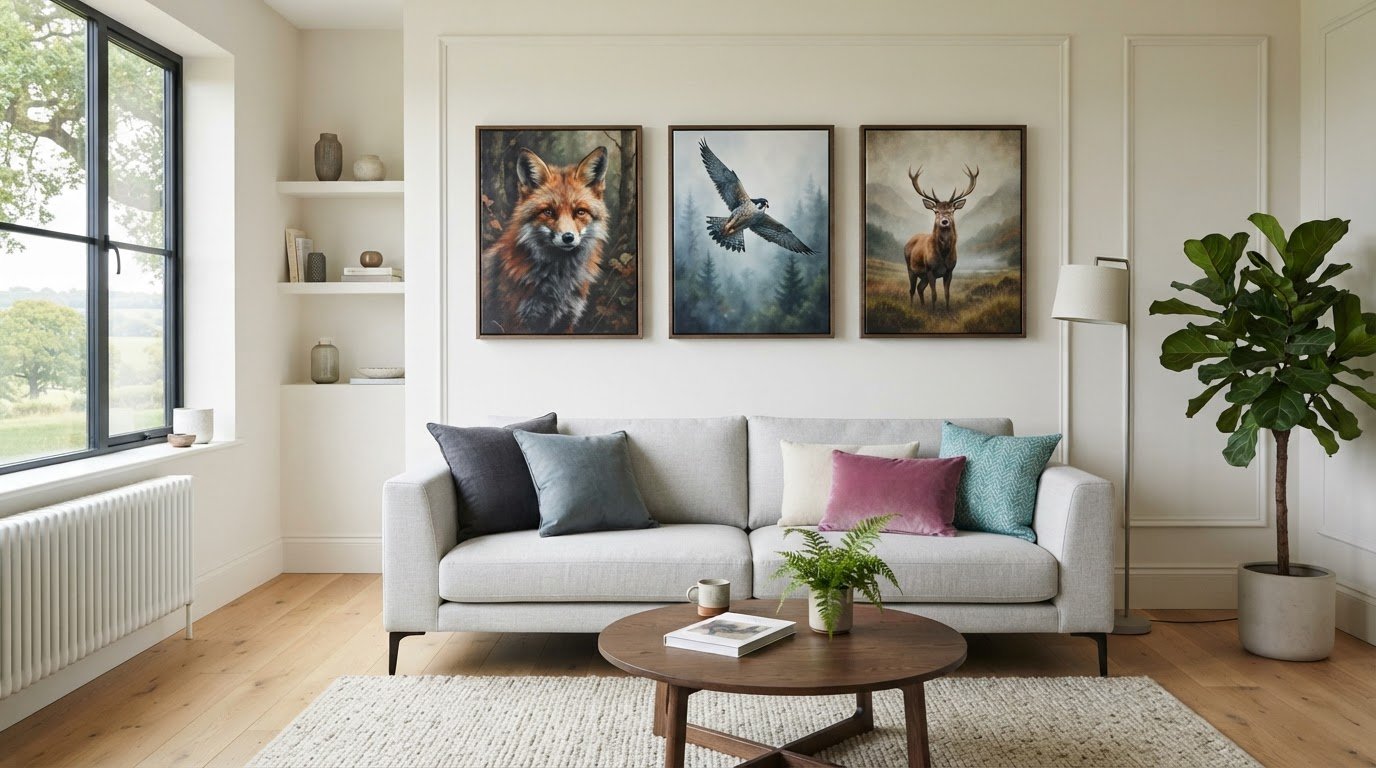
A striking wildlife canvas print doesn’t have to take over a room. The right image can bring a little nature indoors, add warmth and colour, and still sit comfortably with the décor you already love. With so many wildlife canvas prints to choose from, it helps to start with the subject and mood you want.
A close-up animal portrait can feel bold and full of character, while a bird in flight or a quiet woodland scene may bring a lighter, calmer mood. Colour, composition and scale all shape the effect, so the most dramatic picture isn’t automatically the best fit for your space.
Compare animal portraits, birds, forest scenes and other wildlife imagery, then consider how their colours and composition will work in your room. Panther Print’s handmade canvas wall art includes an Animals & Wildlife category, and you can also have a personal wildlife photograph printed on canvas. The guide below will help you find an image that feels like it belongs at home.
Key Takeaways
- Choose wildlife canvas prints for the atmosphere and story you want the artwork to bring to your room.
- Compare photographic and illustrated-looking styles to find an image that suits your taste.
- Notice whether the composition draws attention to an animal or lets its surroundings shape the scene.
- To keep a room feeling balanced, pair a detailed image with simpler colours elsewhere in your décor.
- Explore Panther Print’s Animals & Wildlife category for nature-inspired canvas art for your home or office.
What makes wildlife canvas prints feel at home in a space?
Wildlife canvas prints are canvas wall art showing animals in natural or imagined surroundings. That leaves plenty of room for different looks, from lifelike scenes to more expressive interpretations. The subject gives the image its focus; the setting and visual style help decide how it feels on your wall.
The appeal often comes from a clear connection with nature. A familiar animal can catch the eye straight away, while details in its surroundings add depth and suggest a setting beyond the room. The result might feel lively, still, dramatic or playful, depending on what the image shows and how it’s presented.
Wildlife subjects, animal portraits and nature scenes
Wildlife imagery can show an animal on its own or place it within a recognisable habitat. A close portrait gives the subject centre stage, drawing attention to its expression, markings or gaze. A wider composition shares that attention with the surroundings, so the landscape, plants or water help tell the story.
These approaches can overlap. An animal portrait may include a hint of its natural environment, whilst a habitat-led scene can still make one creature the main point of interest. The distinction is useful rather than strict: think about whether you want the animal to stand out clearly or the whole setting to shape the picture.
Depictions of animals have a long artistic tradition. For background on the people and practice behind it, explore this overview of the history of wildlife art. It offers context for the wider subject, beyond any one image style.
Why nature-inspired imagery catches the eye
Recognisable animals give viewers an immediate point of focus. Their posture and direction can make an image feel alert, restful or full of movement. A scene with more space around its subject may invite the eye to explore the setting, whilst a tighter crop keeps attention close to the animal.
Colour and background matter just as much. Rich greens, earthy browns and muted shades can give an image a grounded, natural feel. Brighter tones or strong contrasts may make it more noticeable against a plain wall. Look at how the background interacts with the subject: a busy setting adds detail, while a quieter one lets the animal stand apart.
That’s what makes this artwork adaptable. You’re choosing more than an animal; you’re choosing the balance between subject, setting and mood. Notice which part of an image draws your eye first, then consider whether that feeling suits the space you have in mind.
Wildlife canvas prints by subject: ideas from woodland to open water
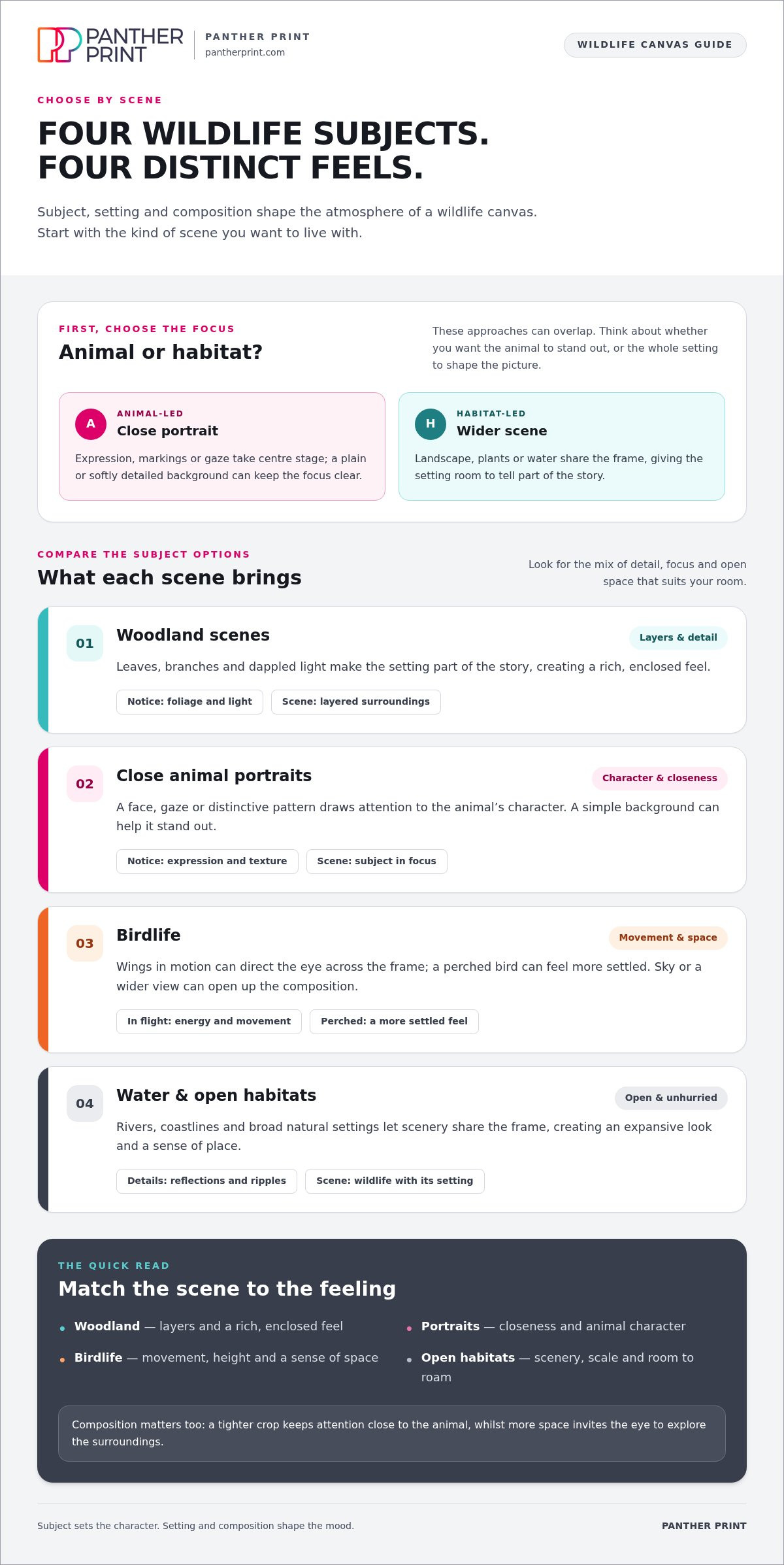
Choosing a subject is a good way to narrow down wildlife canvas prints. Think about the kind of scene you’d like to live with: a tucked-away woodland, an expressive animal portrait or a bird caught in flight. Each approach offers a different balance of colour, detail and open space.
- Woodland scenes: Layers of leaves, branches and dappled light can give a picture a rich, enclosed feel. The setting becomes part of the story.
- Close animal portraits: A face, gaze or distinctive pattern draws attention to the animal’s character. A plain or softly detailed background can keep the focus clear.
- Birdlife: Wings in motion or a bird perched above its surroundings can bring energy, height and a sense of space to a composition.
- Water and open habitats: Rivers, coastlines and broad natural settings let the scenery share the frame with wildlife, creating a more expansive, unhurried look.
Woodland wildlife and close-up animal portraits
Woodland imagery can feel layered and full, especially when foliage, trunks and shifting patches of light fill the scene. It may suit a room where you want a detailed picture with plenty to notice. For a quieter version, look for a composition with one animal clearly set against softer surroundings.
A close portrait offers a different kind of focus. Rather than asking the viewer to explore a whole habitat, it brings expression and texture to the fore. Consider how much of the background remains visible: a simple backdrop can make the animal stand out, while hints of leaves or undergrowth add context without crowding the subject.
Birdlife, water scenes and wide-open habitats
Bird imagery can suggest movement even in a still picture. A bird in flight directs the eye across the frame, whilst a perched subject can feel more settled. Pay attention to the space around it: clear sky or a wide view can make the composition feel open, while closer framing keeps the bird as the main event.
Watery scenes bring their own visual details, from reflections and ripples to a winding riverbank or distant coastline. In a habitat-led image, wildlife and scenery work together. The animal may be smaller within the frame, but its setting gives the scene scale and a sense of place. Look at how the landscape supports the subject, whether it adds movement, texture or a quieter backdrop.
Subject sets the character: woodland brings layers, portraits bring closeness, and open habitats leave room to roam.
Use that simple guide to find imagery that suits the atmosphere you have in mind. Explore Panther Print’s Animals & Wildlife canvas prints for nature-themed wall art.
Compare wildlife canvas print styles by mood and composition
Two images of the same animal can create very different impressions. Photographic detail may feel immediate and lifelike, whilst simplified shapes and bold colour can give a scene a more graphic character. With wildlife canvas prints, style and composition work together: one sets the visual tone, and the other guides your eye around the picture.
Photographic detail or a more stylised look?
Photographic imagery can bring out fur, feathers, markings and the texture of an animal’s surroundings. It may suit you if you enjoy recognisable detail and a natural-looking scene. More stylised artwork might simplify those features, use stronger colours or shape the animal into a striking graphic form. Neither approach is the better choice; go by the atmosphere you want on your wall.
Close-up portraits or scenes with more breathing space?
A close crop makes an animal’s face, markings or expression the first thing you notice. A full-figure view shows its shape and posture, while a habitat-led scene gives more room to the landscape around it. Before choosing, ask yourself what should catch your eye first: the animal’s details, its movement or the wider setting.
| Style or composition | Visual effect | You may prefer it if… |
|---|---|---|
| Photographic close-up | Detailed, direct and focused on expression or texture | You want the animal to be the clear focal point |
| Stylised portrait | Simplified shapes or stronger colour create a graphic feel | You’re drawn to a bolder, less lifelike look |
| Full-figure view | Shows posture and form, with some space around the subject | You want more than a face or detail to stand out |
| Habitat-led scene | Balances wildlife with landscape and background detail | You’d like the surroundings to share attention |
Use the table as a starting point, then look closely at how each image leads the eye. A close crop can feel more immediate because little competes with the animal. A wider composition gives the gaze somewhere else to travel, perhaps across a stretch of land or through a scene. Busy backgrounds add detail; simpler ones can help the main subject stand apart.
Consider the artwork alongside the rest of your room, too. A strongly coloured or detailed print may already bring plenty of visual activity, so quieter décor nearby can help the overall look feel balanced. If you’d like a different visual direction altogether, abstract canvas prints offer a useful contrast through shape and colour rather than a recognisable animal subject.
Wildlife imagery can also prompt interest in the real animals behind the artwork. For a broader perspective, explore The Wildlife Society’s work in wildlife conservation and appreciation. Back at home, let your own preference lead: choose the style that feels right to look at every day.
How to choose wildlife canvas prints without making a room feel busy
A clear selection process makes it easier to find wildlife canvas prints that suit your room rather than compete with everything already in it. Start with the atmosphere you want, narrow down the subject, then compare colours and composition. This keeps the choice manageable and helps you focus on how the image will look in your actual space.
- Pick a mood. Decide whether you want the artwork to feel calm, lively or dramatic. A quiet scene may sit gently in a restful room, while a more energetic pose can add movement to a simple space.
- Choose a subject group. Narrow your search to one direction, such as birds, woodland wildlife or animal portraits. Comparing a smaller group makes it easier to notice which image catches your attention.
- Check colour and composition. Look at the artwork alongside the wall, furniture and nearby decorative details. Consider whether its background and level of detail will complement the room or add visual activity.
Match the image’s colours to the room
Look for colours that already appear in cushions, furnishings, rugs or smaller decorative accents. Related tones can help an image blend into the room, whilst a contrasting colour can make the artwork stand out as a focal point. Neither approach is automatically right. Check the image as a whole, and choose one you’ll enjoy seeing every day, not simply one that matches a cushion.
Think about the background as well as the animal. A print with dense foliage, strong markings and several bright colours may already bring plenty of detail. If the surrounding décor is also patterned or colourful, simpler tones nearby can give the eye a place to rest. Conversely, a plain wall and restrained furnishings can make room for a more vivid image.
Use a quick shortlist to narrow down your choice
Before settling on a print, compare a few favourites. Does the animal stand out clearly? Is the background quiet or full of detail? Does the composition feel balanced with the wall and nearby objects? These simple checks help you picture how the artwork will sit in the room, rather than judging it on its own.
- For a calm look: favour a less crowded composition and colours that echo the room.
- For a lively look: consider movement, brighter colour or a more detailed setting.
- For a dramatic look: notice strong contrast, a close crop or a clear focal point.
Keep the wall’s visual activity in mind. Shelves, mirrors, patterned wallpaper and other artwork all share attention with a canvas print. If that area already feels busy, a simpler composition may sit more comfortably. Size matters too, but it needn’t complicate your choice: use a dedicated canvas size guide to compare proportions with your available wall space.
Once you’ve found the mood, subject and composition that feel right, explore wildlife canvas prints to bring your shortlist together.
Explore Panther Print wildlife canvas prints and make the look yours
You’ve now explored how subject, mood and composition can shape the feel of wildlife artwork. Bring those ideas together before you browse. Are you drawn to a close animal portrait, a bird in motion or a scene that gives the habitat more space? Do you want the image to feel peaceful, lively or dramatic? Your answers can help you focus on prints that feel right for your room.
There’s no fixed decorating formula to follow. A bold image can suit a simple space, whilst a quieter composition may work well among other details. Let the colours and layout of your room guide you, but trust your own taste too. The best choice is one you’ll enjoy looking at, not simply the one that follows a rule.
Browse wildlife imagery with a clear idea in mind
Before exploring Panther Print’s Animals & Wildlife category, settle on one or two preferences. Pick a subject group and a mood, then compare how different images use colour, detail and background. Panther Print’s handmade canvas prints bring wildlife-inspired artwork into your home or office. Keep your shortlist focused, but stay open to an image that catches your eye for a reason you didn’t expect.
As you browse, picture each print in the space rather than judging it in isolation. Consider what’s already on the wall and nearby: a detailed scene might bring plenty of activity, while a simpler composition could leave more visual breathing room. Notice which part of each image attracts your attention first. That small check can help you decide whether the artwork’s character suits the atmosphere you want.
Make a personal wildlife photograph part of the story
Themed artwork isn’t the only way to bring an animal image into your home. If you have a wildlife photograph of your own, Panther Print’s photo-on-canvas printing service can reproduce it as wall art. It’s a personal alternative to choosing an image from the themed category. A meaningful moment you captured can bring its own story and connection to a room.
Whether you choose a themed print or your own photograph, come back to the same simple questions: does the subject appeal to you, does its mood suit the space, and does the composition feel comfortable on that wall? There’s no need to overthink it. A considered choice can make nature-inspired art feel like a natural part of home.
Ready to see what feels right? Explore Panther Print’s wildlife canvas prints and find an image that speaks to your space and your taste.
Give your space a nature-inspired finishing touch
Let the image you choose become a small part of your home’s everyday character. It might bring a favourite memory to mind, spark a conversation or simply make an empty wall feel more personal. There’s no need to make the whole room follow a theme. One considered piece can be enough to add a fresh point of interest.
As you browse wildlife canvas prints, trust the image that keeps drawing your eye. Think about where you’ll see it most, and whether its presence feels right for that spot. A home should reflect the people who live in it, so your own connection to the artwork matters more than following a decorating rule.
Panther Print’s handmade canvas wall art offers nature-inspired designs, and a personal wildlife photograph can be another meaningful way to make the look your own. Explore Panther Print’s wildlife canvas prints and choose an image for your space.
Frequently Asked Questions
What is the difference between wildlife canvas prints and animal canvas prints?
Wildlife canvas prints usually show animals in a natural setting or suggest their life in the wild, while animal canvas prints can include any animal subject, including pets or stylised characters. The terms can overlap, so look at the actual image rather than relying only on its label. For example, a fox in a woodland scene reads as wildlife, whilst a close portrait of someone’s dog is an animal print.
Can I turn my own wildlife photograph into a canvas print?
Yes. Panther Print offers photo-on-canvas printing, so you can have a personal wildlife photograph reproduced as wall art. Choose an image that holds a special memory, such as a bird you spotted on a walk or an animal captured during a trip. Before ordering, check that the photograph is clear enough for the display you have in mind, especially if it includes fine detail.
Are wildlife canvas prints a thoughtful gift for a nature lover?
Yes, a wildlife canvas print can be a thoughtful gift if you know the recipient’s favourite animals, preferred colours or home style. A photograph of a species they love may feel personal, whilst a scene connected to a memorable trip could carry extra meaning. If you’re unsure of their taste, consider a subject they already enjoy rather than choosing a particularly bold image simply because it makes a strong impression.
Are wildlife canvas prints suitable for a child’s bedroom?
They can be a lovely choice for a child’s bedroom. Match the subject and mood to the child’s interests, perhaps a playful animal image for a lively feel or a quieter nature scene for a gentler look. Also consider the room’s existing colours and patterns so the print feels at home. For a personal touch, a family’s own wildlife photograph can make the artwork more meaningful.
Can I put a wildlife canvas print in a bathroom?
You can display wall art in a bathroom, but take care with its position. Frequent steam, condensation and direct splashes may affect artwork over time, so avoid hanging a canvas beside a shower, bath or sink where it’s regularly exposed to moisture. A drier, well-ventilated spot is a more sensible choice. If the room often becomes damp, another room may be better suited to the print.
How are canvas prints different from framed wildlife prints?
A canvas print is an image printed on canvas, while “framed wildlife print” describes artwork presented within a frame, often on paper. The terms describe different things: the print’s surface and how it’s displayed. Canvas has a textured, fabric-like appearance; a framed print has a distinct border around the image. A canvas can also be displayed with a frame, so check the artwork format rather than assuming the labels are opposites.